

Flowers · Orchids
Orchids, delivered across Tampa Bay.
Potted phalaenopsis orchids last for weeks, sometimes months. Here is how to choose the right one for a home, an office or a gift.
Why orchids
A gift that keeps going after the flowers fade elsewhere.
A potted orchid is the longest-lasting gift we make. Cut roses look their best for about a week; a healthy phalaenopsis in bloom often keeps its flowers for one to three months, and with a little care it can bloom again the following year. That's why orchids are such a common choice for new homes, offices, thank-yous and get-well gifts, and why they make sense in a place like Tampa, where many cut flowers struggle in the heat.
All of the studio's orchids are phalaenopsis, often called moth orchids, planted in a vessel and finished with moss. The difference between our four designs is the number of stems and the size of the vessel. This page explains how to pick between them and what to expect once the orchid arrives. For detailed growing advice, our orchid care guide for Florida goes further.
From the shop
The orchid collection
Every orchid is a live, potted phalaenopsis, planted in the studio and finished with moss. Prices are current starting prices.
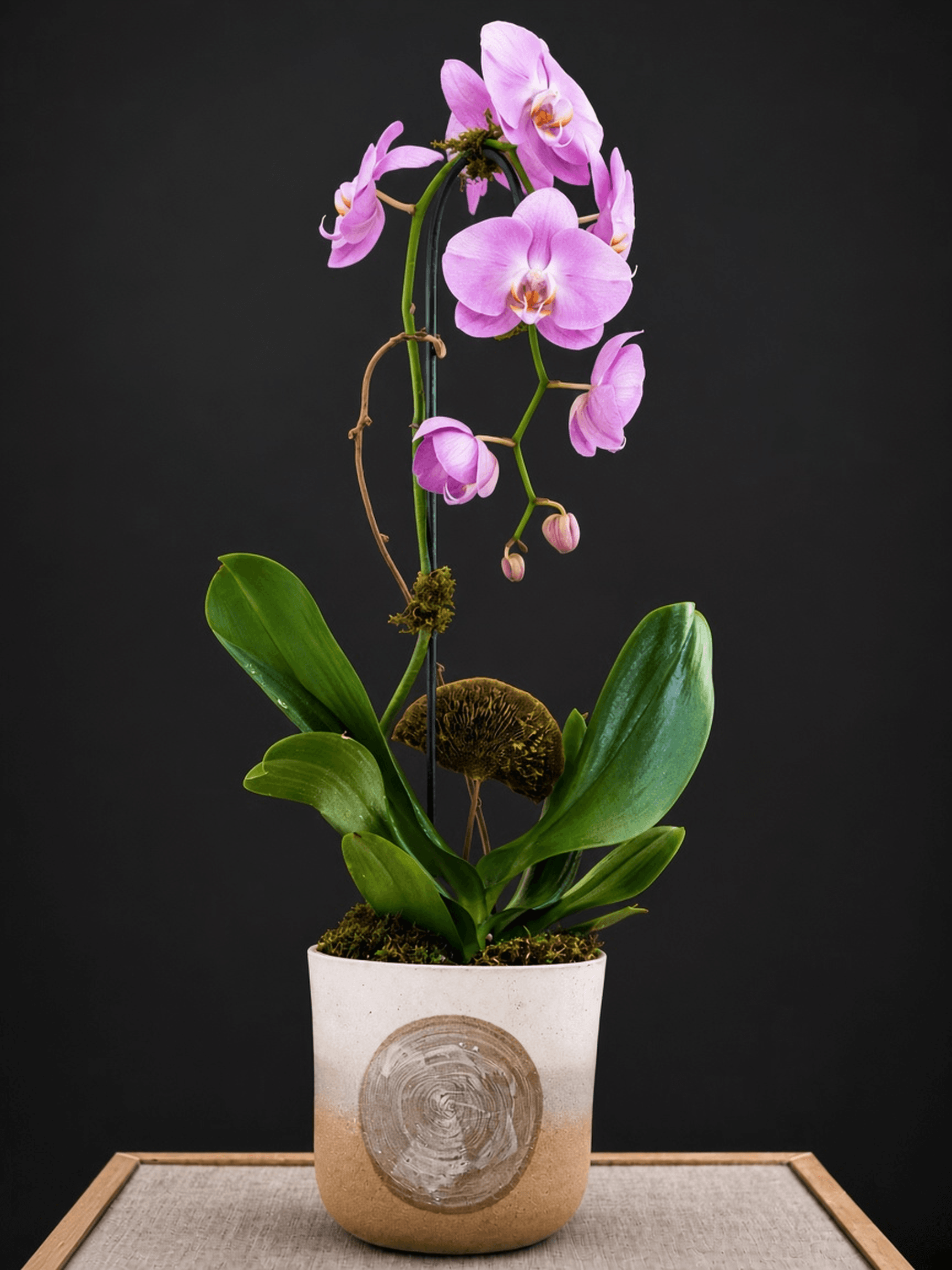
Single Orchid
$125One stem in a ceramic vessel, $125. A thoughtful gift that fits on a desk, a nightstand or a kitchen windowsill.
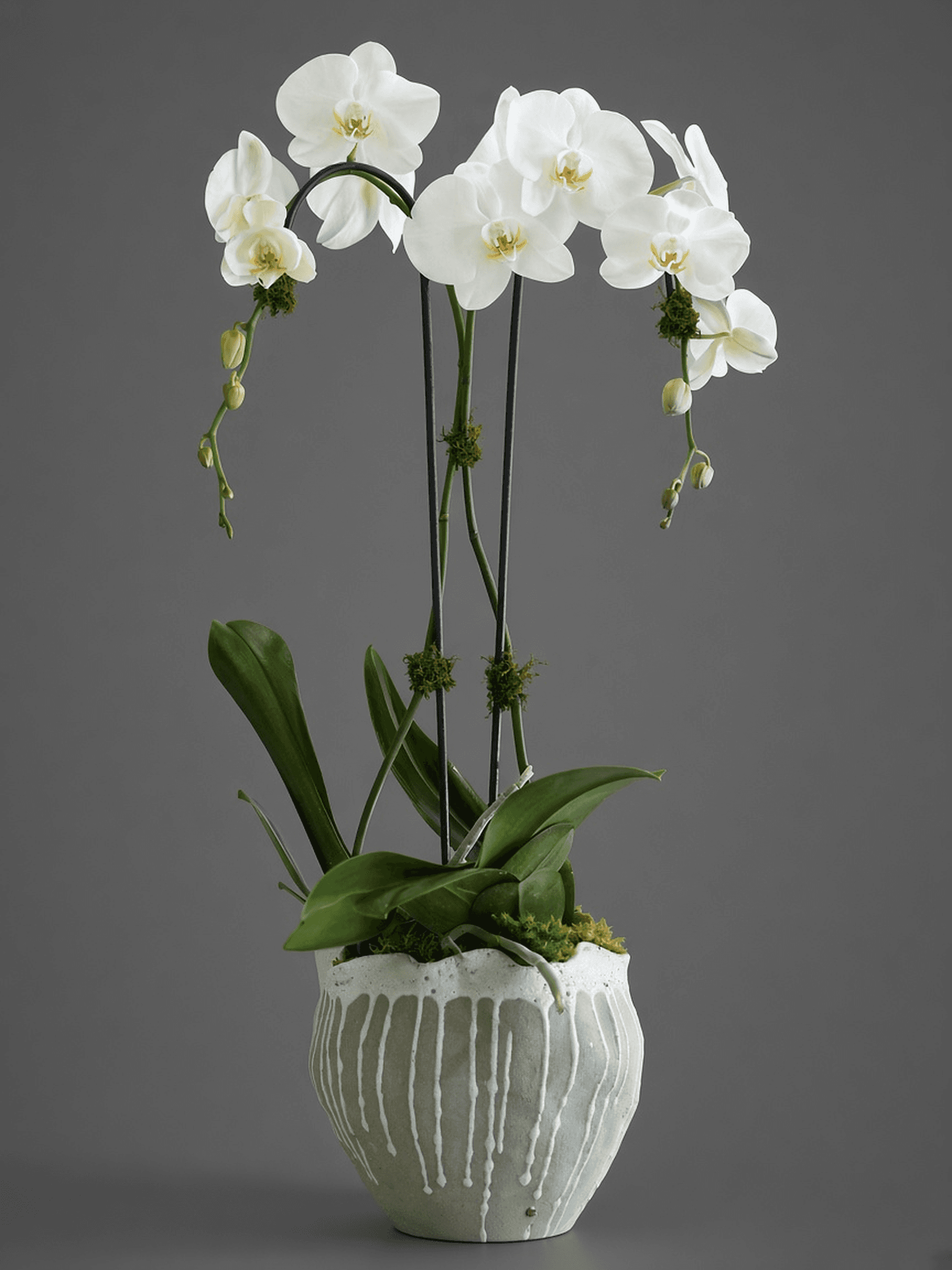
The Orchid Duo
$175Two white phalaenopsis stems composed together, $175. Fuller from every side, and still compact enough for a side table.
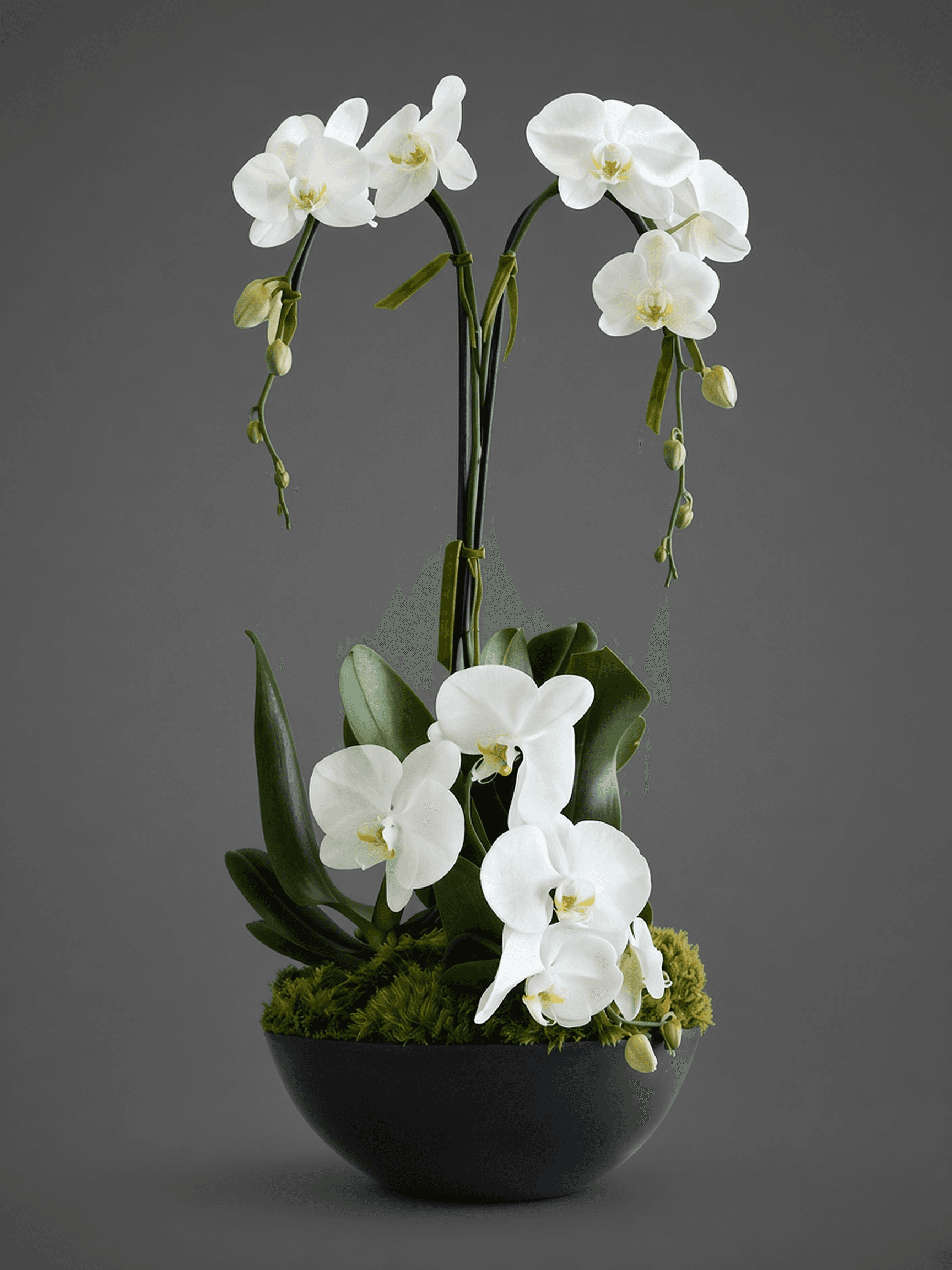
The Orchid Trio
$250Three white stems in a mossed bowl or white vessel, $250. Wide enough to anchor a console, a dining table or a reception desk.
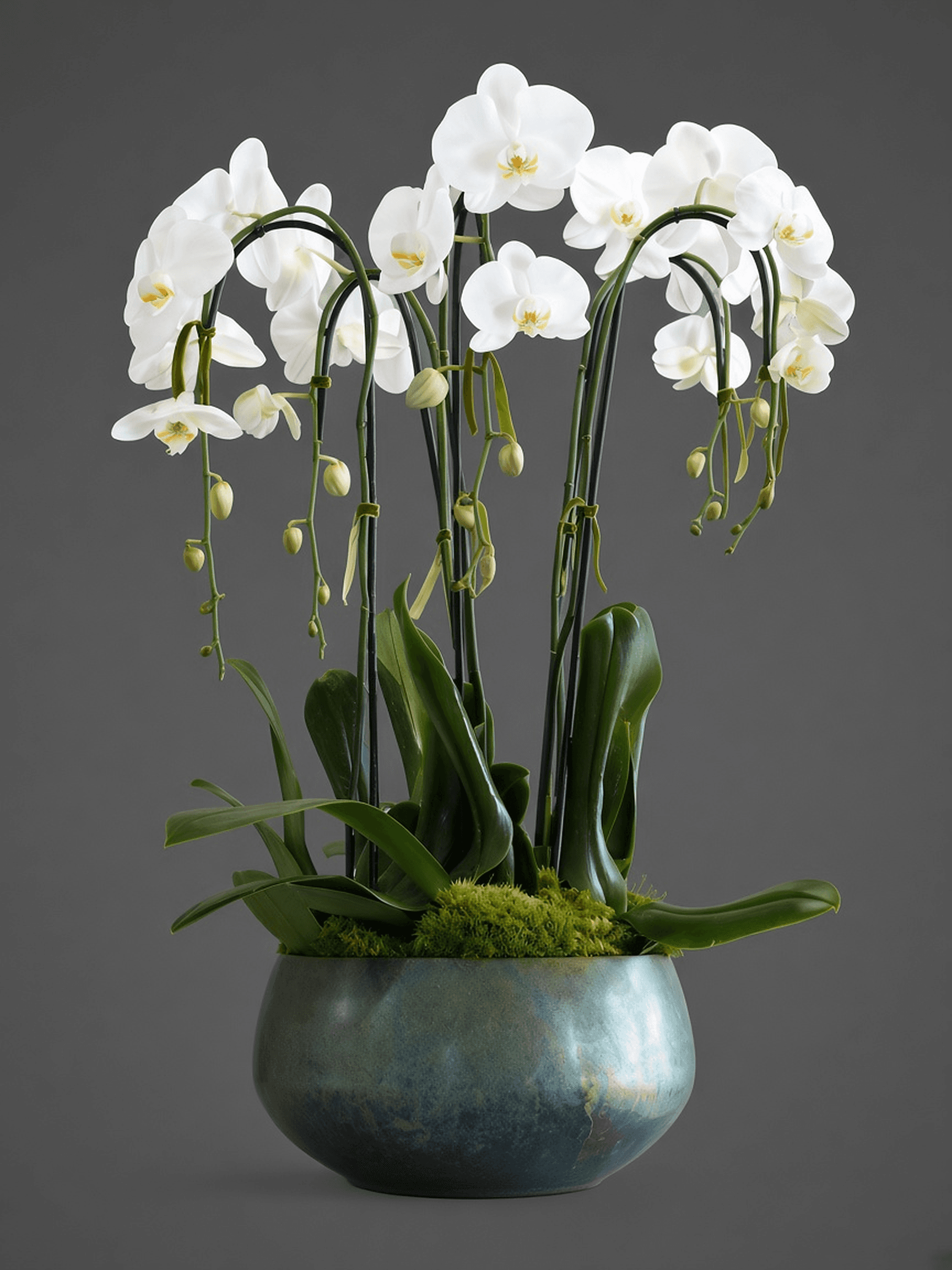
The Grand Orchid Composition
$500A tall white phalaenopsis composition, $500. Built for a lobby, an entry hall or a corporate gift that needs presence.
Choosing
Which orchid design fits where
The right orchid depends mainly on where it will live.
If you're not sure, think about the recipient's space. A grand orchid in a small apartment can feel like a lot to look after, while a single stem in a large lobby will be lost.
- A single stem suits small spaces: a desk, a nightstand, a bathroom counter or a kitchen windowsill. It's also the easiest to carry if the recipient is moving or traveling.
- Two stems look fuller from more angles, which matters on a side table or a coffee table that people walk around.
- Three stems in a wider bowl anchor a larger surface, such as a console in an entry hall, a dining table or a reception desk.
- The Grand Orchid Composition is designed to be seen from across a room. It suits lobbies, offices and large homes.
What to expect
How an orchid looks when it arrives
A phalaenopsis stem carries a row of flat, rounded flowers along an arching spike, often with a few unopened buds at the tip. Those buds open over the following days and weeks, which is part of the pleasure. Flowers open one after another, so the plant may look fuller a week after delivery than on the first day.
The leaves are thick, broad and a glossy green. Healthy roots, if you can see them, are firm and silvery-green or green. Soft, brown or papery roots are a sign of overwatering.
In Florida
Where orchids thrive at home
Phalaenopsis grow naturally in warm, humid forests, often on tree branches under a canopy. A Tampa Bay home is closer to those conditions than most, as long as the orchid isn't placed in harsh light or a draft.
- Light: bright, indirect light, such as an east-facing window or a few feet back from a south or west window. Direct afternoon sun through glass can scorch the leaves in a few hours.
- Temperature: the comfortable range for people, about 65°F to 80°F, suits phalaenopsis well. Keep it away from air-conditioning vents, which dry the air and chill the plant.
- Humidity: Florida's natural humidity helps, but air-conditioned rooms can be dry. A tray of pebbles and water under the pot, without the pot sitting in water, adds moisture.
Watering
The mistake most people make
Overwatering kills more orchids than anything else. Phalaenopsis roots need air as well as water, and a pot that stays wet will rot them.
- Water about once a week, when the moss or bark feels dry to the touch an inch down.
- Water at the sink, letting it drain fully, and never leave the pot sitting in water.
- Some people use three ice cubes a week. It works for some plants, but a proper watering at the sink is more reliable.
- Keep water out of the crown, the center where the leaves meet. Water left there can cause rot.
After the flowers
Getting an orchid to bloom again
When the last flower drops, the orchid isn't finished. Keep caring for the leaves and roots as before. Phalaenopsis usually start a new flower spike after a few weeks of slightly cooler nights, around 55°F to 65°F. In Tampa Bay, that often happens naturally in late autumn and winter, when nighttime temperatures fall. A spot near a window that gets a little cooler at night helps.
You can cut the old spike just above a node, the small bump on the stem, to encourage a new branch, or cut it at the base to let the plant rest. A monthly feed with a balanced orchid fertilizer, diluted to half strength, supports new growth.
Households
Pets, children and offices
Phalaenopsis are listed as non-toxic to cats and dogs by the ASPCA, which is one reason they're a popular gift for homes with pets. The moss and bark aren't food, though, and a curious cat can knock over a tall stem, so a heavy vessel on a stable surface is wise. In an office, the main risk is neglect over a long weekend rather than overwatering, so a weekly watering on the same day works well.
Repotting
Not needed for a long time
The orchid arrives planted and ready, and it won't need repotting for at least a year. When the roots start climbing well over the edge of the pot, or the moss or bark breaks down and stays soggy, it's time. Use a fresh orchid bark mix, never ordinary potting soil, and a pot with drainage holes. Aerial roots growing out of the pot are normal, so leave them be. If you'd rather not repot at all, that's fine too: many people enjoy one long bloom and then pass the plant to a friend with a sunny, bright bathroom, where the humidity suits it.
Gifting
When an orchid is the better choice
Orchids are a good choice when:
For an office or a business, the corporate gifting page covers bulk orders.
- The recipient will appreciate something that lasts. New homeowners, colleagues and teachers often do.
- The occasion is calm rather than celebratory: thanks, congratulations, or sympathy.
- The recipient is in a hospital. Some hospital units don't allow cut flowers or soil plants, so check with the unit first. See our get well flowers page for more.
- The gift is for an office or a reception desk, where a cut arrangement would need replacing within a week.
FAQ
Orchid questions.
How long do potted orchids last?
A healthy phalaenopsis in bloom often keeps its flowers for one to three months. With good care, the plant can bloom again the following year.
How often should I water an orchid in Florida?
About once a week, when the moss or bark feels dry an inch down. Water at the sink, let it drain fully, and never leave the pot sitting in water.
Where should I put an orchid at home?
In bright, indirect light, such as an east-facing window or a few feet back from a south or west window. Keep it away from direct afternoon sun and air-conditioning vents.
How do I get my orchid to bloom again?
Keep caring for the leaves and roots after the flowers drop. Phalaenopsis usually start a new spike after a few weeks of nights around 55°F to 65°F, which often happens naturally in Tampa Bay in late autumn and winter.
Are orchids a good sympathy gift?
Yes. A white orchid is a calm, lasting gift for a grieving family, and it doesn't need to be arranged or replaced. See our [sympathy flowers](/occasions/sympathy-funeral) page for more.
From the journal
More flowers
Send orchids today.
Order online, or call us for custom designs and same-day requests.