

Occasions · Get Well & New Baby
Get well and new baby flowers.
Hospitals set their own flower rules. Here is how to send get-well and new-baby flowers that arrive, are allowed, and are welcome.
The first rule
Check the hospital before you send.
Every hospital sets its own rules on flowers, and some units don't allow them at all. Intensive care units, oncology and transplant units, and some maternity and neonatal areas often restrict fresh flowers and plants, because of infection risk, allergies and space. A beautiful arrangement that's turned away at the door helps no one.
So the first step is simple: call the unit, or ask the family, before you order. If flowers aren't allowed, a delivery to the home once the patient is back is often more welcome anyway. The studio can help you work out the right approach. Call (813) 252-0601.
From the shop
Designs for recovery and new arrivals
Compact, lightly scented, low-care designs. Prices are current starting prices.

Single Orchid
$125One white phalaenopsis stem, $125. Compact, lightly scented, and it keeps blooming through a long recovery.
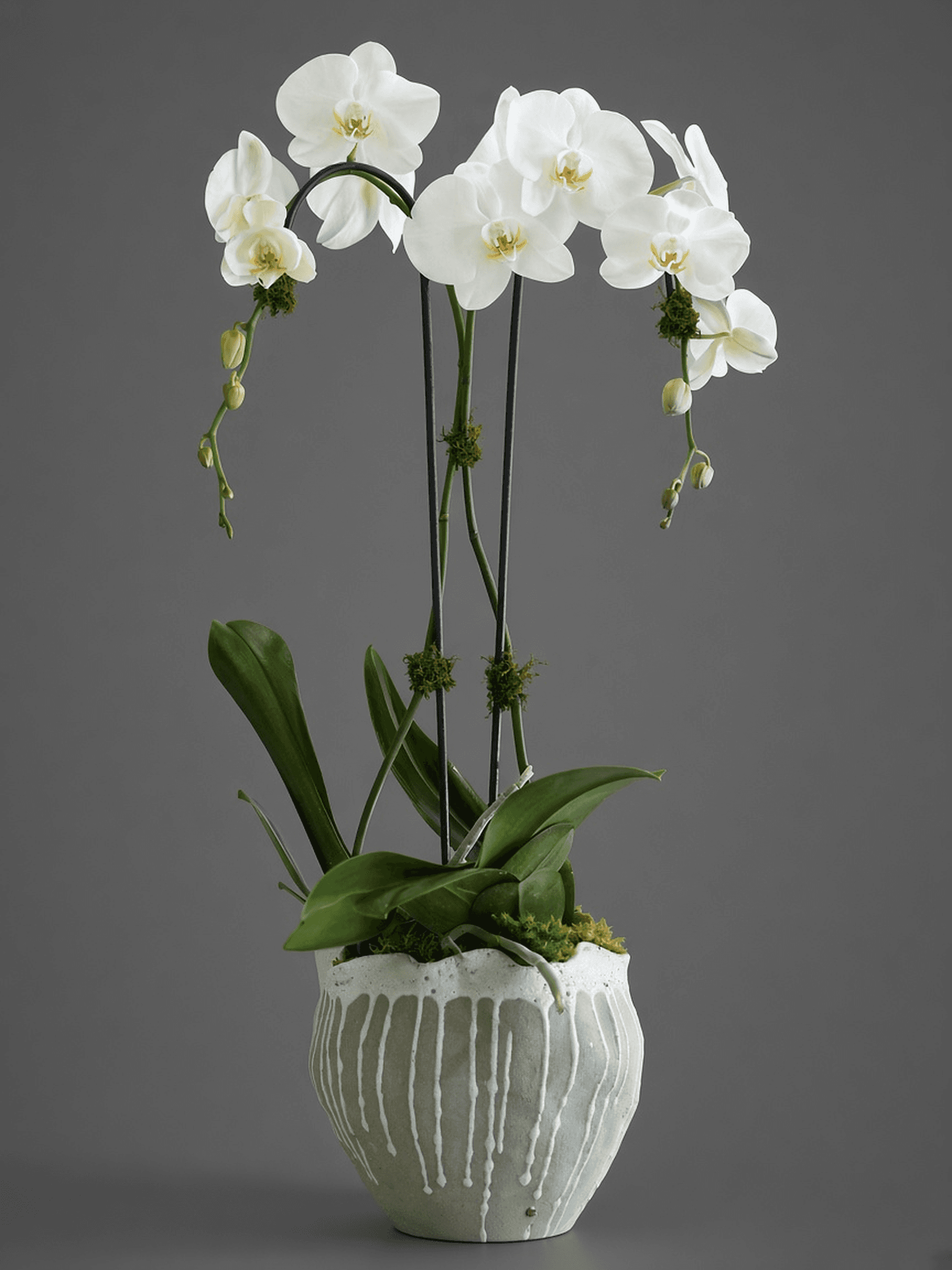
The Orchid Duo
$175Two stems, $175. A little more presence for a home, and still only a weekly watering.
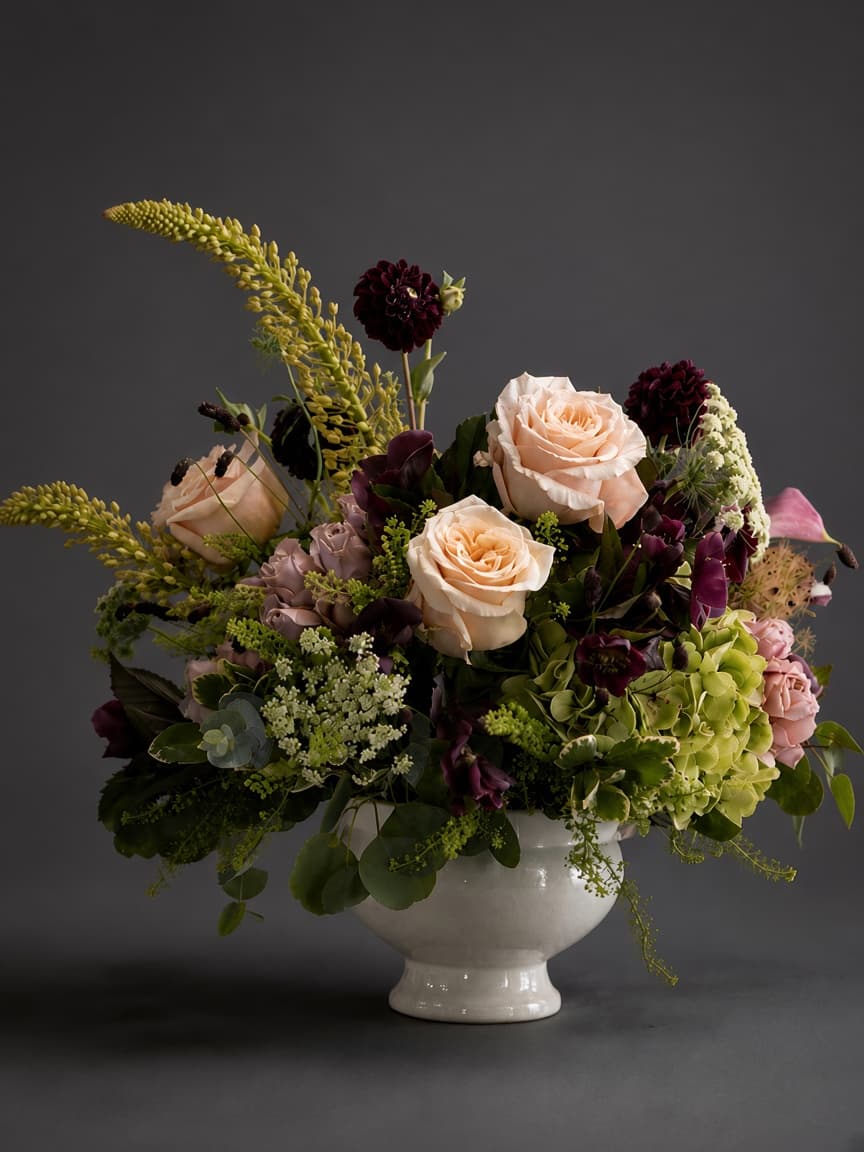
Bella Vista
$150 – $500A graceful vase arrangement, from $150, sized for a bedside table or a kitchen counter once they're home.
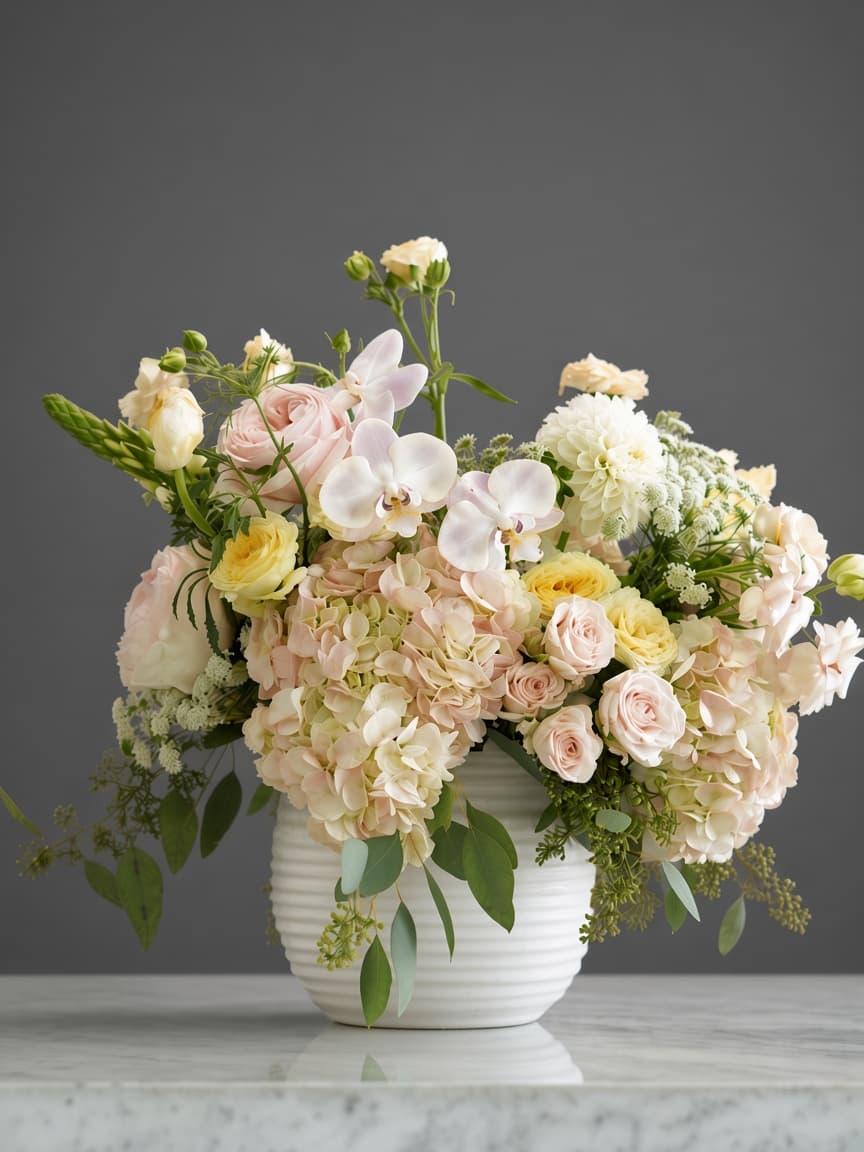
Culbreath Isles
$150 – $300Movement and color, from $150, for a homecoming or a new nursery that needs some cheer.
Hospitals
Sending flowers to a Tampa Bay hospital
The studio regularly gets requests for hospitals across the area, including Tampa General Hospital on Davis Islands, Moffitt Cancer Center and AdventHealth Tampa near USF, AdventHealth Carrollwood, HCA Florida Brandon Hospital, St. Joseph's Hospital-South in Riverview, St. Joseph's Hospital-North in Lutz, South Florida Baptist Hospital in Plant City and AdventHealth Wesley Chapel.
For any hospital delivery, have these ready:
Rules can change, and they vary by unit. Moffitt Cancer Center's visitation policy, for example, doesn't allow fresh flowers or live plants in bone marrow transplant and neutropenic patient rooms. Always confirm with the unit or the patient's nurse before ordering.
- The patient's full name, as registered at the hospital.
- The hospital name and, if you know them, the building, unit and room number.
- The expected discharge date, if known, so the flowers don't arrive after the patient has left.
- A phone number for a family member, in case there's a question.
Home or hospital
Why home is often better
Hospital rooms are small, busy and often shared. Flowers compete for space with equipment and meals, and they may need to be left behind when the patient is moved or discharged. Many families say flowers at home, after discharge, meant more than flowers in the hospital. The patient can enjoy them in a familiar space, without nurses moving them out of the way.
Home delivery also avoids the hospital rules entirely. If the stay is short, consider timing the flowers for the day after the patient gets home.
Choosing
What to send someone who's unwell
A few considerations for get-well flowers:
For a long recovery, or for someone going through cancer treatment, check whether fresh flowers are allowed at home too. During some treatments, doctors advise against fresh flowers and soil plants because of infection risk.
- Scent: strong scents, like lilies, hyacinths and some garden roses, can be too much for someone who's nauseous or recovering from surgery. Lightly scented flowers are kinder.
- Pollen: lilies shed pollen that stains and can trigger allergies. If lilies are included, the studio can remove the pollen-bearing anthers.
- Size: a compact arrangement fits on a bedside table or a hospital windowsill. A large arrangement can be a burden.
- Care: someone recovering doesn't want to change vase water every two days. An orchid needs only a weekly watering and keeps blooming for weeks.
- Color: bright, warm colors, such as yellow, peach and soft orange, feel cheerful. White and green feel calm.
New babies
Flowers for new parents
New-baby flowers are lovely, but the timing and the place matter.
Choose a compact, lightly scented design, and place it out of reach of babies and pets. An orchid is easy for tired parents. You don't need to choose pink or blue. Soft whites, greens and pastels suit any baby.
- Many maternity units allow flowers, but some restrict them, and neonatal intensive care units almost never allow them. Ask first.
- New parents often go home within a day or two of the birth. Flowers sent to the hospital may arrive after they've left.
- A delivery to the home, a week or so after the birth, is often more welcome, when the first rush of visitors has passed.
The card
Short and warm
Get-well cards don't need to be long. A few ideas:
For someone with a serious illness, avoid "get well soon," which may not feel right. "Thinking of you" is often better. Our flower etiquette guide has more advice.
- "Thinking of you and wishing you a speedy recovery."
- "Rest up. We miss you."
- "Sending love and strength."
- "Welcome to the world, [baby's name]," for a new baby.
- "Congratulations on your beautiful new family."
Long stays
Flowers through a longer recovery
Some recoveries take weeks: a long hospital stay, rehabilitation, or treatment that comes in cycles. One arrangement on the first day is lovely, but it fades within a week. Smaller deliveries spread out over time, such as one every week or two, remind the person that people are still thinking of them after the first wave of messages has stopped. If you'd like to set up repeat deliveries, call the studio.
For someone in a rehabilitation center or a skilled nursing facility, the same rules apply as for a hospital: ask the front desk first, and give the resident's full name and room number.
At home
Making the delivery easy for the household
When someone is recovering at home, the household is often stretched. A few small choices help:
- Send a vase arrangement, not a wrapped bouquet, so nobody has to find a vase and trim stems.
- Ask the family about the best delivery time, so the doorbell doesn't wake someone who's resting.
- If there's a cat in the house, avoid lilies entirely. All parts of the lily, even the pollen and the vase water, are toxic to cats.
- Keep it compact. Kitchen counters and bedside tables fill up quickly with medicines and meals.
For teams
Thanking nurses and medical staff
Families sometimes send flowers to a nursing station or a medical team as a thank-you. Many units appreciate this, but the same flower rules apply, so check with the unit first. A potted orchid, or an arrangement for a staff break room, is a good choice. For corporate or bulk orders, see corporate gifting.
FAQ
Get well and new baby questions.
Can I send flowers to a hospital in Tampa?
Many hospitals accept flowers, but rules vary, and some units, like ICUs, don't allow them. Call the unit or ask the family before ordering, and have the patient's full name and room number ready.
Can I send flowers to Moffitt Cancer Center?
Moffitt's visitation policy doesn't allow fresh flowers or live plants in bone marrow transplant and neutropenic patient rooms, and other units may have their own rules. Call first to confirm, or consider sending flowers to the patient's home once they're back.
What are the best get-well flowers?
Compact, lightly scented flowers in warm or calm colors. An orchid is a good choice, because it lasts for weeks and needs only a weekly watering.
Should I send new-baby flowers to the hospital or home?
Home is often better. New parents usually go home within a day or two, and some maternity units restrict flowers. A delivery a week after the birth is often especially welcome.
Are lilies safe for a hospital room?
Lilies have a strong scent and pollen that can trigger allergies and stain. Lightly scented flowers are a better choice. Lilies are also toxic to cats, which matters once the patient is home.
What if the hospital doesn't allow flowers?
Send them to the patient's home instead, timed for the day after discharge, or wait until the recovery is underway. A card message delivered with the flowers later is just as meaningful.
Related occasions
From the journal
Need help choosing?
Call us and we'll help you choose, or create something custom.