
Occasions · Sympathy & Funeral
Sympathy and funeral flowers in Tampa Bay.
Practical guidance for a hard moment: where to send flowers, when, what kind, and what to say on the card.
Start here
You don't need to get this perfect.
When someone has died, the family is rarely judging the flowers. What they remember is that you thought of them. Still, a few practical decisions make it easier: whether to send to the service or to the home, when, and what to write. This page covers each, along with customs worth knowing, so the flowers are welcome.
If you're unsure, call the studio on (813) 252-0601 and we'll help you decide.
From the shop
Designs for sympathy and remembrance
Calm whites, creams and greens, arranged by hand. Prices are current starting prices; the studio can adjust size and color on request.
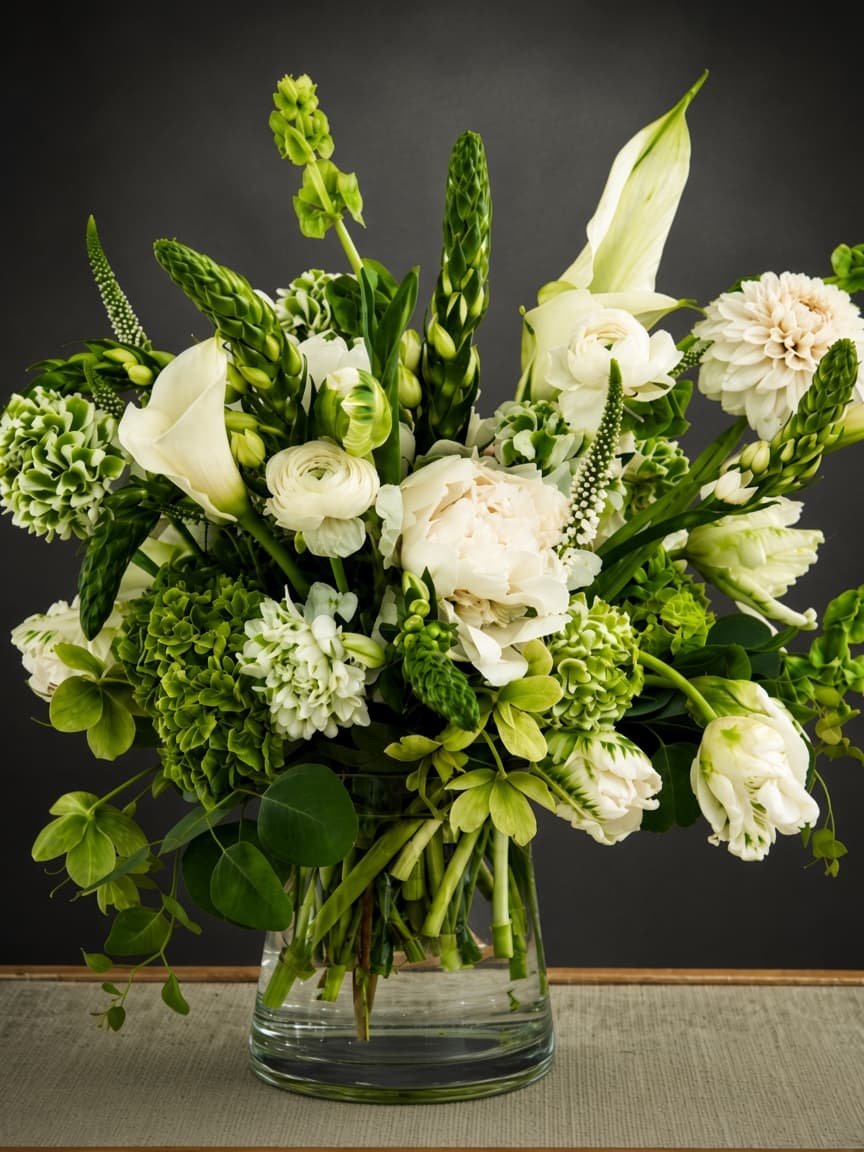
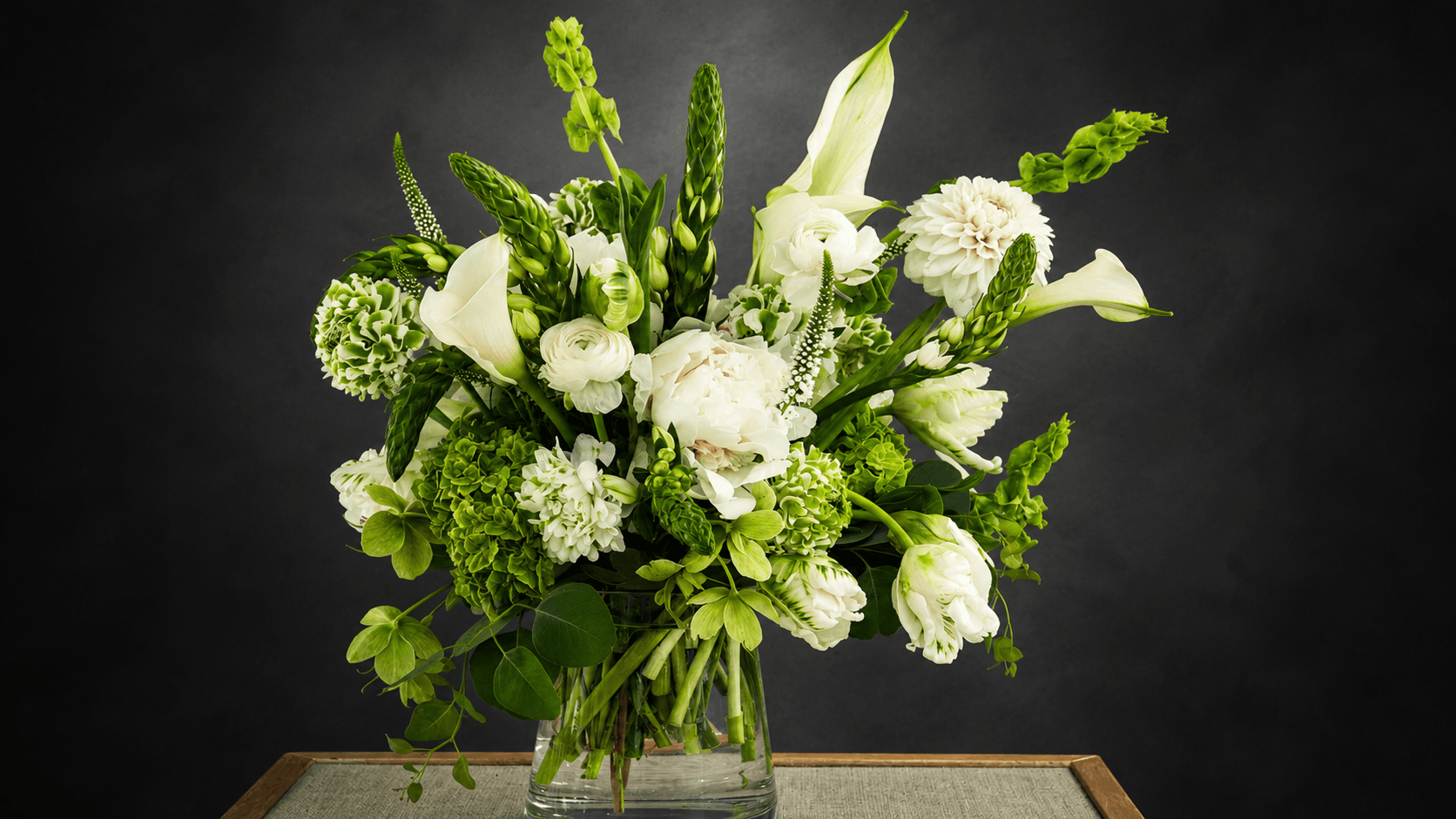
Swann Sympathy
$150 – $300Our dedicated sympathy arrangement, from $150, in whites and soft greens. Sized for a family's kitchen table or a service.
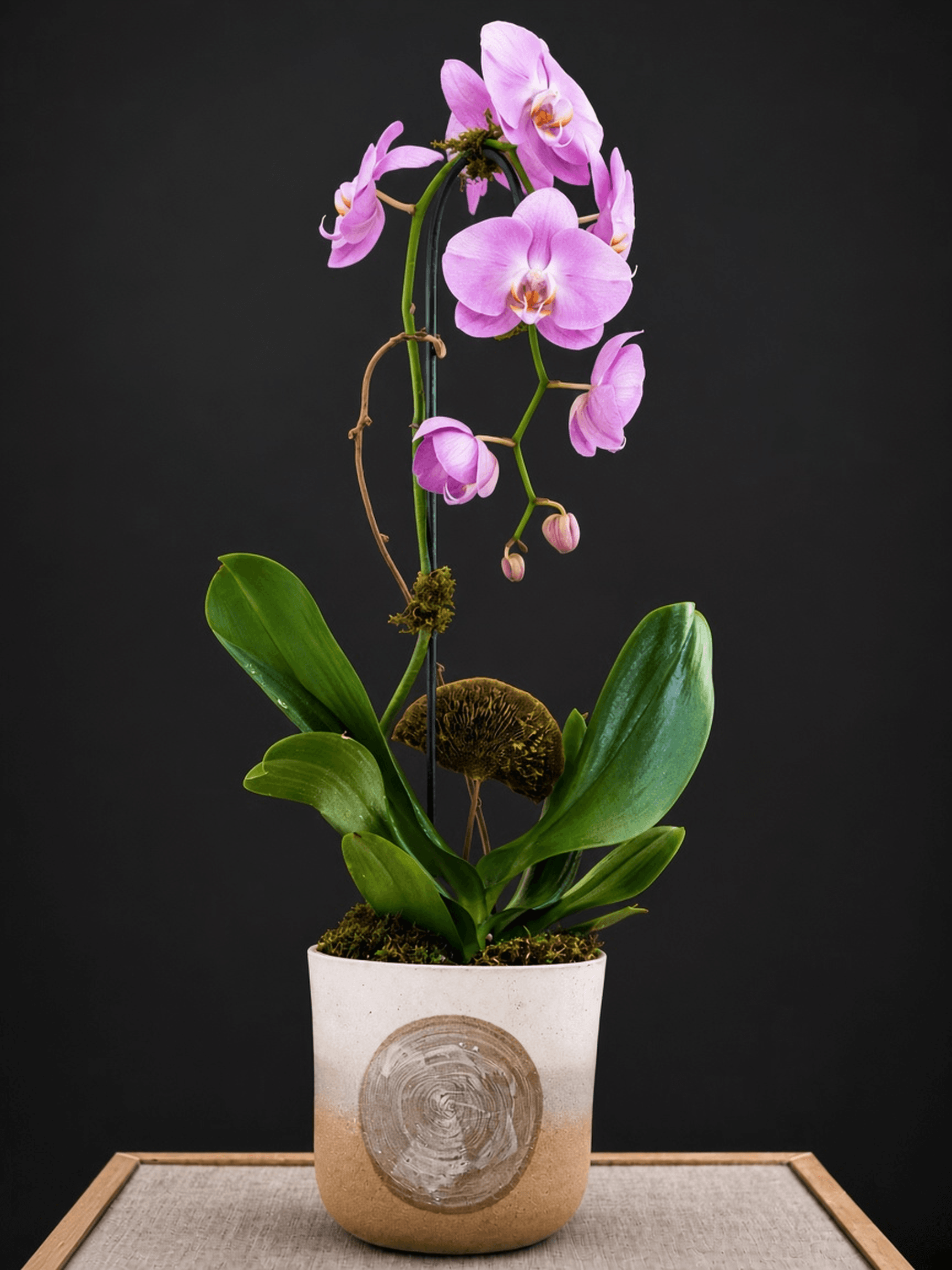
Single Orchid
$125A white phalaenopsis in a vessel, $125. It keeps blooming for weeks and asks almost nothing of a grieving household.
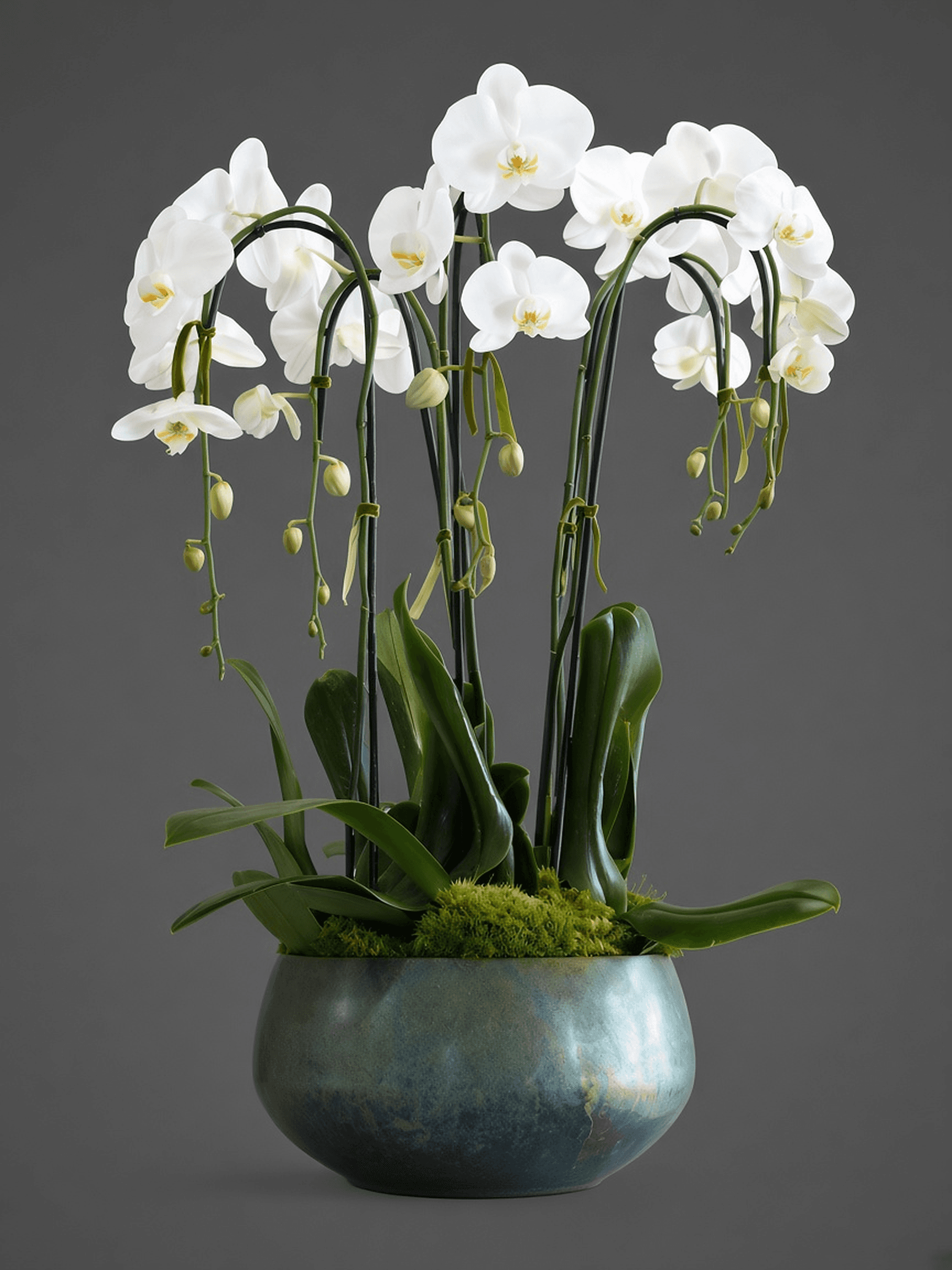
The Grand Orchid Composition
$500A tall white orchid composition, $500, with enough presence for a service or a memorial reception.
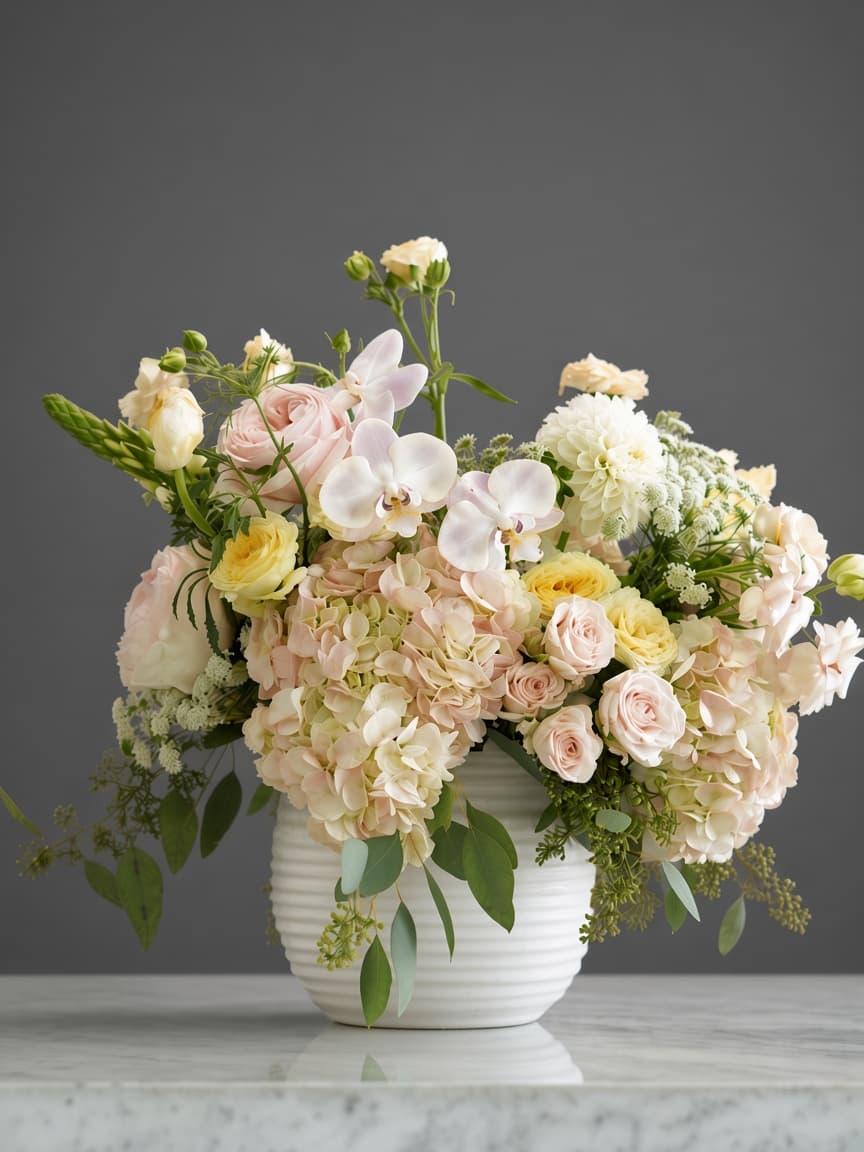
Culbreath Isles
$150 – $300A fuller vase arrangement, from $150, which the studio can compose in a softer, quieter palette for the family home.
Where
Funeral home, church or the family's home
There are two main options, and both are appropriate.
Close family and friends sometimes send both. Colleagues, neighbors and acquaintances usually send one or the other, and a home arrangement is never wrong.
- Flowers for the service go to the funeral home, church or venue before the viewing or the service. They're displayed near the casket or urn, or at the entrance, and are seen by everyone who attends. They often go home with the family afterwards.
- Flowers for the family go to their home. They're more personal, and many families find them most meaningful in the days and weeks after the service, when the house is quieter and the visitors have gone.
When
Timing for each kind of delivery
For a service, timing matters. Flowers need to arrive before the doors open, often an hour or two ahead. When you order, share:
For the home, there's no deadline. A delivery a week or two after the service is often especially welcome. Some people also send flowers on the first anniversary of a death, or on a birthday, which families remember.
- The name and address of the funeral home or church.
- The date and start time of the viewing or the service.
- The full name of the person who has died, so the funeral home can place the flowers correctly.
Customs
Faith and family traditions to check first
Customs around flowers vary, and it's worth checking before you send.
If the obituary asks for donations in lieu of flowers, honor that request first. A small arrangement sent to the home later is still a kind gesture.
When in doubt, the funeral home can tell you what the family prefers.
- At Jewish funerals, flowers are not traditionally part of the service or the shiva. Food, a donation or a personal visit is more usual. A plant or flowers sent to the home later is sometimes welcome, but ask a family member first.
- Many Christian services, including Catholic and Protestant funerals, welcome flowers at the church and the funeral home.
- In many Hindu, Buddhist and Chinese families, white and yellow flowers are customary for mourning, and bright red is generally avoided.
- In many Muslim families, simplicity is emphasized, and practices around flowers differ. Ask before sending to the service.
Choosing
What to send
Sympathy flowers usually lean calm and quiet. White and cream are traditional, soft greens add peace, and pale pastels can feel personal. Bright, celebratory colors are usually kept for other occasions, unless you know the family would like them. A favorite flower of the person who died is always a thoughtful choice, so tell us if you know it.
A potted orchid is one of the most practical sympathy gifts. It doesn't need arranging, it lasts for weeks, and it doesn't need a vase or fresh water every few days, which a busy, grieving house will appreciate.
The card
What to write
Keep it short and sincere. The family will read many cards, and a few honest words mean more than a long message.
If you knew the person, a short memory is the most meaningful thing you can write. Sign with your full name, and your relationship if the family may not know you, for example "Sarah Klein, from Dan's office."
For a business sending flowers to a colleague's family, sign with the team or company name. Our flower etiquette guide has more examples.
- "With deepest sympathy."
- "Holding you close in our thoughts."
- "Remembering [name] with so much love."
- "Thinking of you all, and of [name], today."
Budget
How much to spend
There's no correct amount, and a family won't compare. As a rough guide, based on the studio's current prices:
If several people want to contribute, one generous arrangement is usually better than several small ones.
- A single white orchid, at $125, or the Swann Sympathy at its standard size, from $150, is a thoughtful gift from a friend, neighbor or colleague.
- A larger Swann Sympathy, up to $300, suits close friends or a group sending together.
- The Grand Orchid Composition, at $500, has the presence for a service or a memorial reception, and is often sent by close family or a company.
Memorials
Celebrations of life and receptions
Many families now hold a celebration of life or a memorial reception rather than a traditional funeral, sometimes weeks later, in a home, a club or a restaurant. These events often feel warmer, and the flowers can be too: the person's favorite colors, garden flowers, or something that reflects their life. Ask the family or the organizer what they'd like, and share the venue address and the start time when you order.
Afterwards
Helping the family keep the flowers
Arrangements from a service often go home with the family. A short note on caring for them helps: fresh water every two days, re-cut stems, and a cool spot away from direct sun. Some families like to keep a few dried petals or a ribbon. An orchid will need only a weekly watering.
Other losses
Pets, pregnancy loss and difficult situations
Grief isn't limited to funerals. Losing a pet, a pregnancy loss, or a death that was complicated can leave someone without the usual rituals, and flowers are a gentle way to acknowledge it. Keep the card simple, such as "Thinking of you," and choose something small and calm. An orchid is a good choice, and it doesn't ask anything of the person.
For businesses
Sending on behalf of a team
When a colleague or a client loses someone, a company often sends flowers. A few points:
For ongoing corporate gifting, see corporate gifting.
- Decide who sends: the team, the company or a senior leader. One arrangement from everyone is better than several separate ones.
- Check whether the colleague would prefer privacy. Some would rather the office didn't send flowers to the service.
- A home arrangement or an orchid is a safe, discreet choice.
Anniversaries
The first year
The weeks after a funeral are quiet, and the first birthday, holiday or anniversary of the death can be the hardest. A small arrangement or an orchid on that date, with a card that names the person who died, tells the family they're not the only ones who remember.
FAQ
Sympathy flower questions.
Should I send flowers to the funeral home or the family's home?
Either is appropriate. Service flowers go to the funeral home or church before the viewing or service. Home flowers are more personal and often appreciated in the weeks after the service.
What flowers are appropriate for sympathy?
White and cream flowers, such as roses, lilies and orchids, are traditional, and soft greens add calm. Pale pastels feel gentle. Bright reds are usually avoided.
Is it appropriate to send flowers to a Jewish funeral?
Flowers are not traditionally part of a Jewish funeral or shiva. Food, a donation or a visit is more usual. Ask a family member before sending flowers to the home.
What should I write on a sympathy card?
Keep it short: "With deepest sympathy" or "Remembering [name] with so much love." A short memory of the person is the most meaningful. Sign with your full name.
Is it too late to send sympathy flowers?
No. Flowers sent weeks after the service, or on the first anniversary, are often especially meaningful, because they arrive when the family feels most alone.
Related occasions
From the journal
Need help choosing?
Call us and we'll help you choose, or create something custom.