
Corporate clients
The houses we compose for























Guides · · By Carmen Raterman & Sandra Moreno
Flower etiquette for real life.
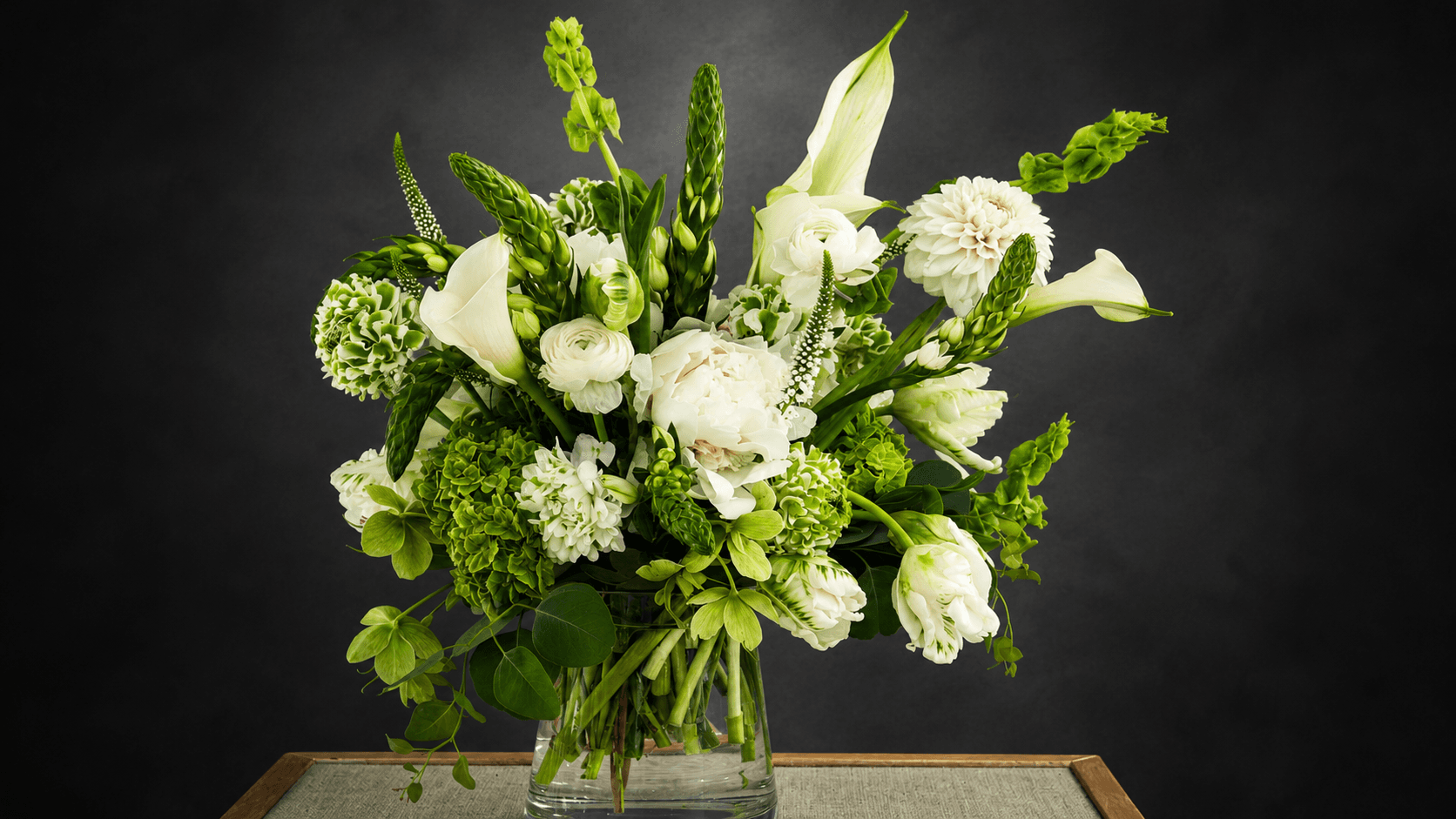
Most flower etiquette is common sense: send something that suits the person, at a moment when it's welcome, with a card that says who it's from. But there are situations where people hesitate. Should you bring flowers to a dinner party? Can you send flowers to a man? What if the family asked for donations? This guide answers the questions we hear most often in the studio.
For occasion-specific advice, see our guides to sympathy, birthdays, anniversaries and get well and new baby flowers.
Bringing flowers to someone's home
Bringing a loose bouquet to a dinner party is a kind thought with a practical problem: the host has to stop what they're doing, find a vase, trim the stems and arrange them while guests arrive.
Better options:
If you do bring a bouquet, say "no need to put these out now," so the host doesn't feel obliged.
- Send flowers the day before, so the host can use them on the table.
- Send them the day after, as a thank-you.
- Bring an arrangement already in a vase, which needs nothing from the host.
Yes, you can send flowers to a man
Many men have never received flowers, and many would like to. The usual advice is to lean towards strong shapes and deeper or greener colors, but the better advice is to choose for the person. Some men love soft peonies. Others would prefer an orchid or a sculptural tropical design. For a colleague or a client, a calm green-and-white arrangement or an orchid is a safe choice.
Colleagues, bosses and clients
For businesses sending regularly, see corporate gifting.
- Sending flowers to a colleague for a birthday, a promotion, a new baby or a loss is always appropriate.
- For a boss, a group gift from the team is usually more comfortable than an individual one.
- For a client, flowers mark closings, renewals, referrals and anniversaries. Avoid romantic red roses.
- Check whether the workplace has rules about deliveries, and whether the person would like the attention.
Graduations, recitals and performances
Flowers for performers are a long tradition. A bouquet handed over after a recital, a dance show or a play is a lovely gesture. Bring it with you rather than having it delivered, and give it after the performance, not before.
For graduations, a bouquet is easy to carry and photographs well. Choose school colors, if you know them. For a university graduation, a delivery to the graduate's home or a family dinner may be easier than bringing flowers to a crowded ceremony.
Check before you send
Hospitals set their own rules, and some units, like intensive care, don't allow flowers. Ask the family or call the unit first. Often, flowers sent home after discharge are more welcome. See our get well flowers guide for more.
Service or home, and when to wait
Flowers for a funeral service go to the funeral home or church before the service. Flowers for the family can go to their home at any time, and are often especially welcome weeks later. Check customs: flowers are not traditional at Jewish funerals, for example. If the family has asked for donations, honor that first. Our sympathy guide covers each of these.
Guests, hosts and the couple
Wedding guests don't usually send flowers to the wedding itself. The couple has a florist and a plan, and a surprise arrangement at the venue creates work for the planner. Better moments:
- A bouquet to the couple's home when they're back from the honeymoon.
- Flowers to the parents of the couple, as a thank-you for hosting.
- A small arrangement to the bride or groom on the morning of the wedding, at the hotel where they're getting ready, if you're close family. Check with the planner first.
Housewarmings, pets and plants
A new home is a natural moment for flowers. A few things to think about:
- Pets: lilies are highly toxic to cats, even the pollen. If the household has a cat, choose something else. Orchids are on the ASPCA's non-toxic list.
- Space: a new home may still be full of boxes. A compact arrangement or an orchid is easier than a large piece.
- Delivery: in Tampa's summer heat, flowers left outside a door wilt fast. Arrange a time when someone is home, or send to an office.
Do colors still carry messages?
The Victorian language of flowers gave meanings to everything, and a few still linger. Red roses read as romantic, so most people avoid them for colleagues. Yellow roses suggest friendship. White flowers are traditional for sympathy in many Western cultures, but in parts of East Asia white is associated with mourning, so avoid all-white for celebrations with those families. Beyond that, few people read hidden meanings. Choose what suits the person.
Flowers that say sorry
Flowers can soften an apology, but they don't replace one. Send them with a short, sincere card that takes responsibility, and avoid anything grand, which can feel like it's trying to buy forgiveness.
How much to spend
There's no fixed rule. A few guidelines:
For reference, the studio's wrapped bouquets start at $100, vase arrangements at $150 and orchids at $125.
- Spend what you're comfortable with. A small, well-chosen bouquet is better than a large arrangement that feels like a strain.
- Close relationships and milestones call for more.
- For a group gift, pool for one larger arrangement.
- In a work context, check whether there are gift limits, especially for clients or government employees.
When flowers should arrive
Late flowers are better than no flowers. A card that says "I've been thinking of you" covers it.
- Birthdays and anniversaries: on the day, or the working day before if it falls on a weekend.
- New babies: once the family is home, often a week or so after the birth.
- Sympathy: before the service, or in the weeks after.
- Thank-yous: within a week or two of the kindness.
- Get well: once you know the person is able to receive them.
How to write it and sign it
The card matters as much as the flowers. A few rules:
Anonymous flowers are fine for a secret admirer, but almost always confusing in other contexts.
- Always sign your full name, unless the recipient knows you by a first name alone. Recipients sometimes can't tell which "Sarah" sent them.
- Add your relationship if needed, for example "from Mark's team at the office."
- Keep it short. Two or three lines are enough.
- Be specific. "Congratulations on the new house, can't wait for the first barbecue" means more than "Congratulations."
- For sympathy, avoid explaining or comparing. "Thinking of you" is enough.
Passing flowers on
Is it rude to pass on flowers you were given? Not if they're still fresh and you're honest about it. After a party, hosts often send extra arrangements home with a grandparent or drop them at a neighbor's. After an event, our repurposing guide explains how to share or donate centerpieces in a way that's genuinely welcome, and what hospitals and care homes will and won't take.
How to say thank you
When you receive flowers, a thank-you is good manners. For close friends and family, a text or call is fine. For formal gifts, sympathy flowers or business gifts, a written note is better, within a couple of weeks. After a funeral, families often send thank-you notes weeks or months later. Nobody minds.
FAQ
Flower etiquette questions.
Is it rude to bring flowers to a dinner party?
No, but a loose bouquet makes the host stop to find a vase. Send flowers the day before or after, or bring an arrangement already in a vase.
Can you send flowers to a man?
Yes. Choose for the person. An orchid, a sculptural tropical design or a green-and-white arrangement are common choices, but many men are happy with any flowers.
How should I sign a flower card?
With your full name, and your relationship if the recipient may not know you. Keep the message short and specific.
How much should I spend on flowers?
There's no fixed rule. Spend what you're comfortable with, more for close relationships and milestones. For a group gift, pool for one larger arrangement.
Do I need to send a thank-you note for flowers?
For close friends, a call or text is fine. For formal, business or sympathy flowers, a written note is better, within a couple of weeks.