
Corporate clients
The houses we compose for























Care · · By Carmen Raterman & Sandra Moreno
Orchid care in Florida, season by season.
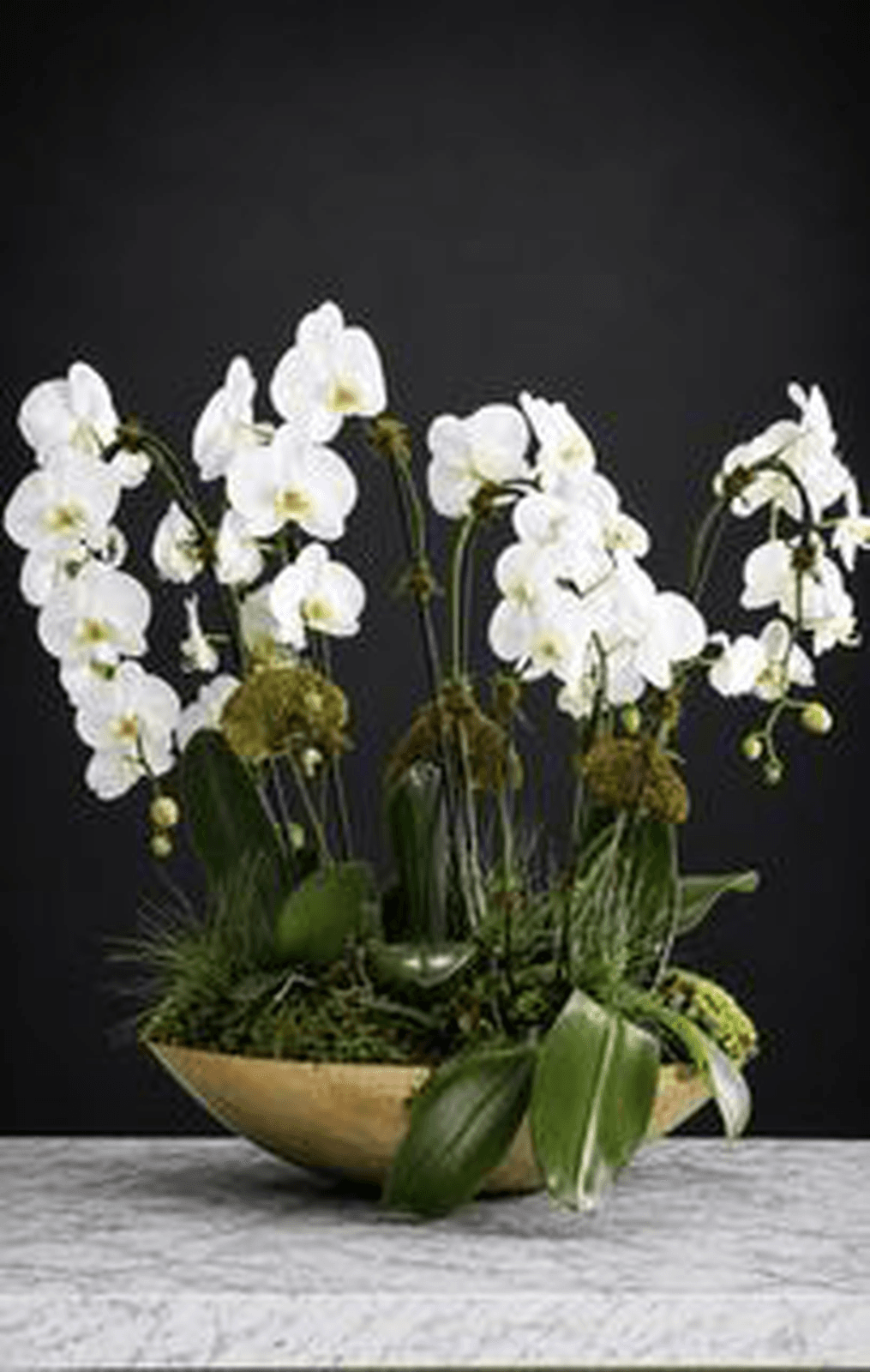
The orchids sold as gifts, including all of ours, are almost always phalaenopsis, the moth orchid. They're the easiest orchids to keep at home, and Florida is a better place for them than most of the country. The humidity, the warmth and the bright light all suit them. The two things that cause most problems here are overwatering and air conditioning.
This guide is about keeping a phalaenopsis healthy and getting it to bloom again. If you're choosing an orchid as a gift, see our orchid collection.
What to do when your orchid arrives
A few buds dropping in the first week is common, especially if the plant went from a cool studio to a warm car or a bright room. As long as the leaves look firm, the plant is fine.
- Unwrap it as soon as it arrives, and check the moss or bark. It's usually moist when it leaves the studio, so it probably won't need water for several days.
- Choose its spot before you set it down. Moving an orchid in bloom from place to place can cause buds to drop.
- Don't repot it. It's planted to last through this bloom and beyond.
- Leave the stake and clips in place. They support the flower spike, which is heavier than it looks.
How often, and how
The rule is simple: water when the potting medium is nearly dry, not on a schedule. For most Florida homes, that's roughly once a week, but it changes.
To water, take the pot to the sink, run room-temperature water through it for a few seconds, and let it drain completely. Never leave the pot standing in water. If the orchid sits in a decorative ceramic vessel, lift the inner pot out to water it.
- Moss holds water much longer than bark. If your orchid is planted in moss, water less often, perhaps every ten days to two weeks. Press a finger into it: if it feels damp, wait.
- Bark dries faster, often within a week.
- Clear plastic pots let you see the roots. Silvery roots need water. Green roots are fine.
The Florida indoor problem
Most Florida homes run air conditioning for much of the year. AC dries the air and creates cold drafts, and an orchid right under or in front of a vent will lose buds and dry out.
- Keep the orchid away from vents, ceiling fans blowing directly on it, and doors that open onto hot afternoons.
- Group it with other houseplants, which raises humidity around them.
- A humidity tray, a shallow tray of pebbles with water below the top of the pebbles, helps in very dry rooms.
Bright, but not direct
Phalaenopsis like bright, indirect light. In Florida, the sun is strong, and direct afternoon sun through a west or south window can burn the leaves in an afternoon. Burned leaves show pale or brown patches that don't recover.
Good signs: leaves that are a medium, olive green. Very dark green leaves suggest too little light. Yellowish leaves with red tinges suggest too much.
Growing orchids on a lanai or under trees
Many Florida gardeners grow orchids outdoors for much of the year. A screened lanai or the shade of an oak tree can suit phalaenopsis well, as long as you remember three things:
- Shade: phalaenopsis need heavy shade outdoors, much more than other orchids. Direct sun will scorch them.
- Rain: summer rains can keep the pot soaked for days. Use bark rather than moss outdoors, and tilt the pot so water drains out of the crown.
- Cold: bring orchids indoors when nights drop below about 55°F. Cold fronts in Tampa Bay can bring nights into the 40s, and phalaenopsis are damaged by cold.
Fertilizer, lightly
Orchids need less fertilizer than most plants. Use a balanced orchid fertilizer at quarter to half strength, every two to four weeks while the plant is growing new leaves or roots. Water with plain water once a month to flush salts out of the pot. Don't feed a plant that's dry; water first.
Getting a second bloom
When the last flower drops, the plant isn't dead. It's resting. To bloom again, a phalaenopsis needs healthy leaves and roots, and then a few weeks of cooler nights, around 55°F to 65°F, with days about 10 to 15 degrees warmer.
In Tampa Bay, that drop often happens naturally in late autumn and winter. Placing the orchid near a window, where nights are a little cooler, helps. In a home kept at the same temperature day and night, reblooming is harder.
You have two choices with the old spike:
A new spike looks like a root at first, but it has a pointed, mitten-shaped tip and grows upward. It can take two to three months to bloom.
- Cut it just above a node, the small bump on the stem, below where the flowers were. This may produce a smaller branch of flowers sooner.
- Cut it at the base. The plant will put its energy into leaves and roots, and the next spike will usually be stronger.
When and how
Repot every one to two years, after flowering, when the medium breaks down or roots climb far out of the pot. Use fresh orchid bark, not potting soil, and a pot only slightly larger than the root mass. Trim any soft, brown or hollow roots with clean scissors.
Leaving an orchid while you travel
Orchids handle a week or two alone better than most houseplants. Before you go, water thoroughly and let the pot drain, then move the orchid away from windows, where a hot afternoon could scorch it while nobody is watching. If you'll be gone in summer and plan to raise the thermostat, keep it below about 85°F, and group the orchid with other plants to hold humidity. For longer trips, ask a neighbor to water once, rather than leaving the pot standing in a saucer of water, which rots the roots.
If yours isn't a phalaenopsis
Occasionally a gift orchid is a dendrobium, an oncidium or a cymbidium. Dendrobiums like more light than phalaenopsis and a drier rest in winter. Oncidiums, with their sprays of small yellow flowers, like bright light and frequent watering. Cymbidiums need a real cool spell to bloom and are hard to rebloom in Tampa Bay's warm winters. If you're not sure what you have, a photo of the flower and leaves is usually enough to identify it.
What's wrong with my orchid?
Small plantlets, called keikis, sometimes grow on the flower spike. Once they have roots a few inches long, you can pot them separately.
- Yellow lower leaves: one old leaf turning yellow is normal. Several leaves turning yellow at once usually means overwatering or root rot.
- Wrinkled, limp leaves: the roots aren't taking up water, either because the plant is too dry, or because the roots have rotted. Check the roots.
- Buds dropping before opening: usually a change in temperature, a draft, or a move.
- Sticky leaves, white fluff or brown bumps: these are signs of pests, such as mealybugs or scale. Wipe them off with a cotton swab dipped in rubbing alcohol, and repeat weekly.
- Black, soft spots on leaves: often a rot, from water left in the crown. Cut away affected tissue, and keep water off the leaves.
FAQ
Orchid care questions.
How often should I water an orchid in Florida?
When the potting medium is nearly dry, which is usually about once a week in bark and less often in moss. Water at the sink, let it drain fully, and never leave the pot standing in water.
Can orchids live outside in Florida?
Phalaenopsis can live outdoors in heavy shade, such as a screened lanai, for much of the year. Use bark rather than moss, and bring them inside when nights drop below about 55°F.
Why are my orchid's leaves turning yellow?
One old lower leaf turning yellow is normal. Several leaves at once usually means overwatering or root rot. Check the roots and let the medium dry between waterings.
How do I get my orchid to bloom again?
Keep the leaves and roots healthy, and give the plant a few weeks of cooler nights, around 55°F to 65°F. In Tampa Bay, that often happens naturally in late autumn and winter.
Is air conditioning bad for orchids?
AC dries the air and creates cold drafts. Keep orchids away from vents, and use a humidity tray in very dry rooms.