

Flowers · Tropical Flowers
Tropical flowers for Tampa Bay homes and events.
Bold shapes, deep color and stems that handle warmth better than most. What tropical flowers are, how long they last, and where to use them.
The short version
Tropical flowers suit Tampa's climate and big rooms.
Most classic cut flowers come from cool growing regions. Roses, peonies and tulips are bred for mild temperatures, and they struggle in a Florida summer. Tropical flowers come from warm, humid places, and many handle heat better. They also have strong, graphic shapes: a heliconia or a protea is visible from across a room in a way a spray rose is not.
That makes tropical designs a practical choice for outdoor events, sunny rooms and big spaces such as lobbies and showrooms. This page explains the main tropical stems, how long they last, how to care for them, and when a garden flower is still the better choice.
From the shop
Tropical and garden-tropical designs
These designs lean on bold foliage and sculptural stems. Exact flowers change with what is available each week.
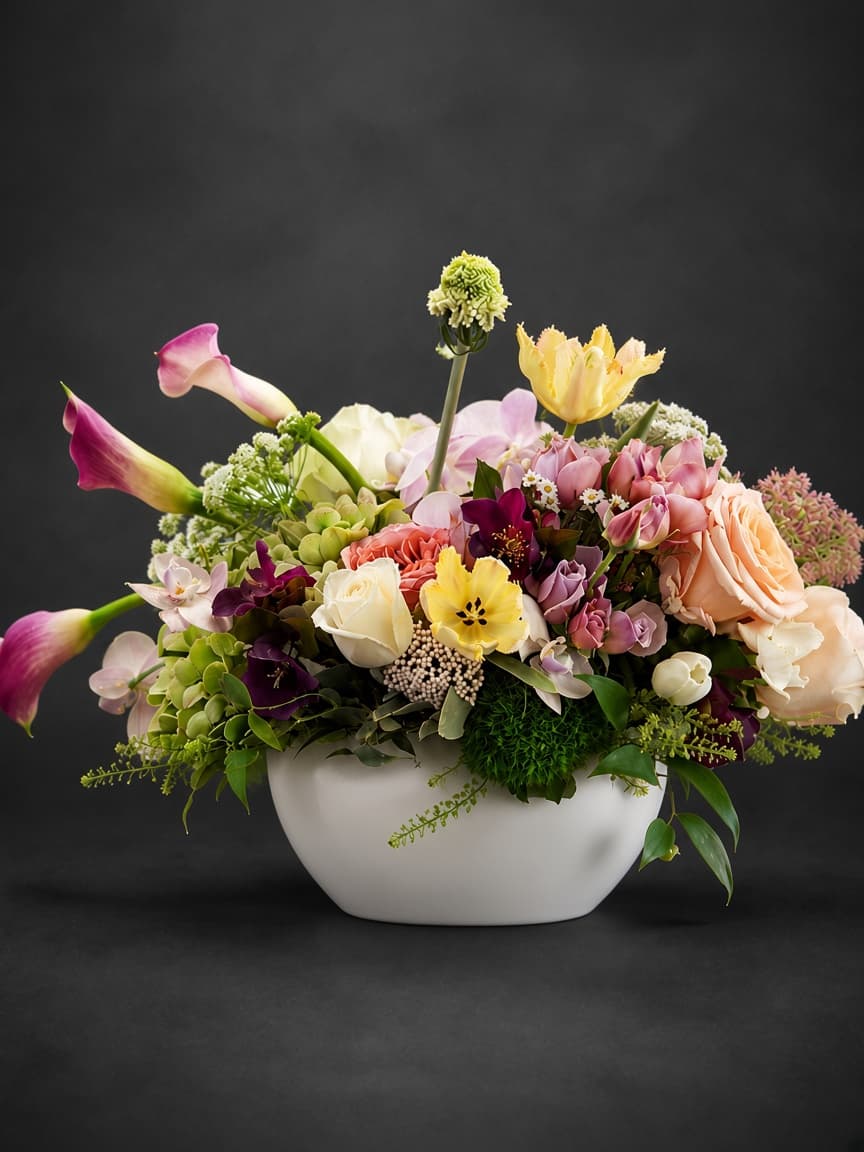
Tampa Luxe
$300Our signature garden-tropical arrangement, $300. Lush and full-bodied, and the easiest way to bring tropical color into a room.
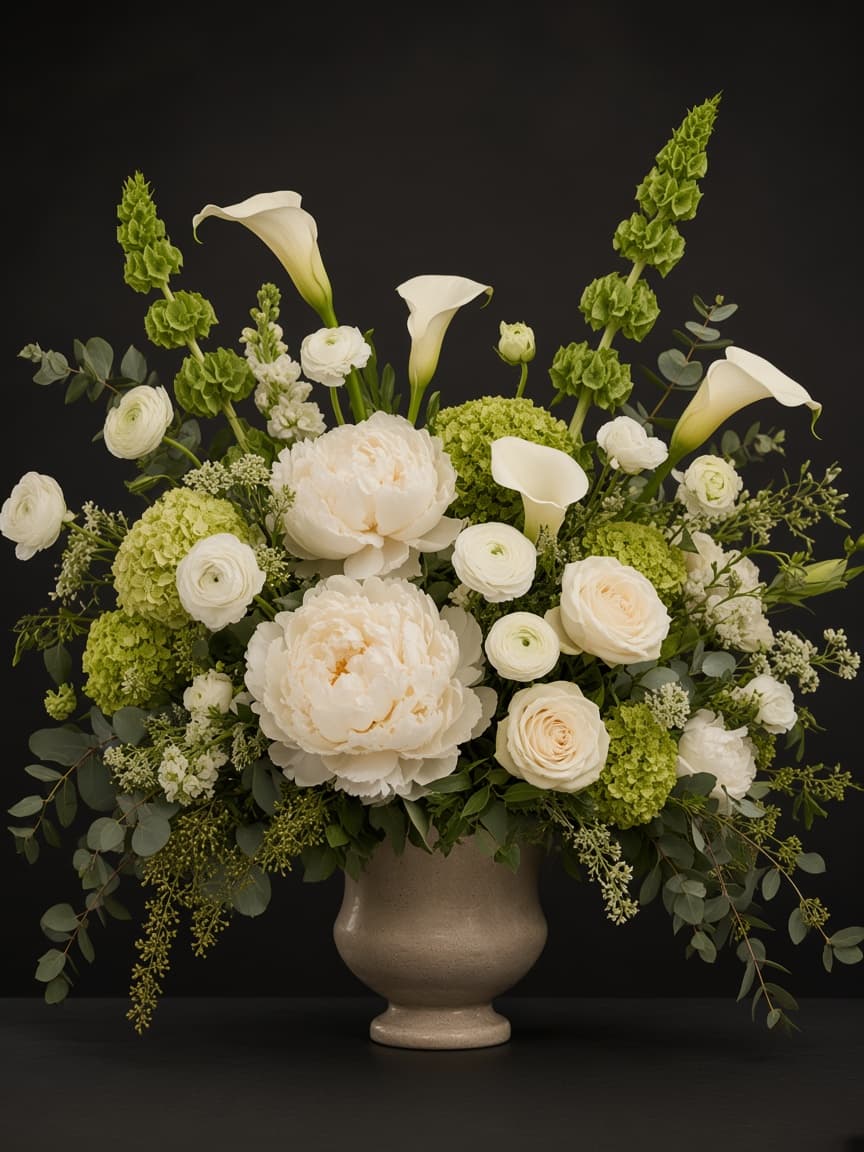
Palma Ceia
$500Sculptural greenery with a quieter palette, $500. For a modern home, a gallery wall or a reception desk where color should stay calm.
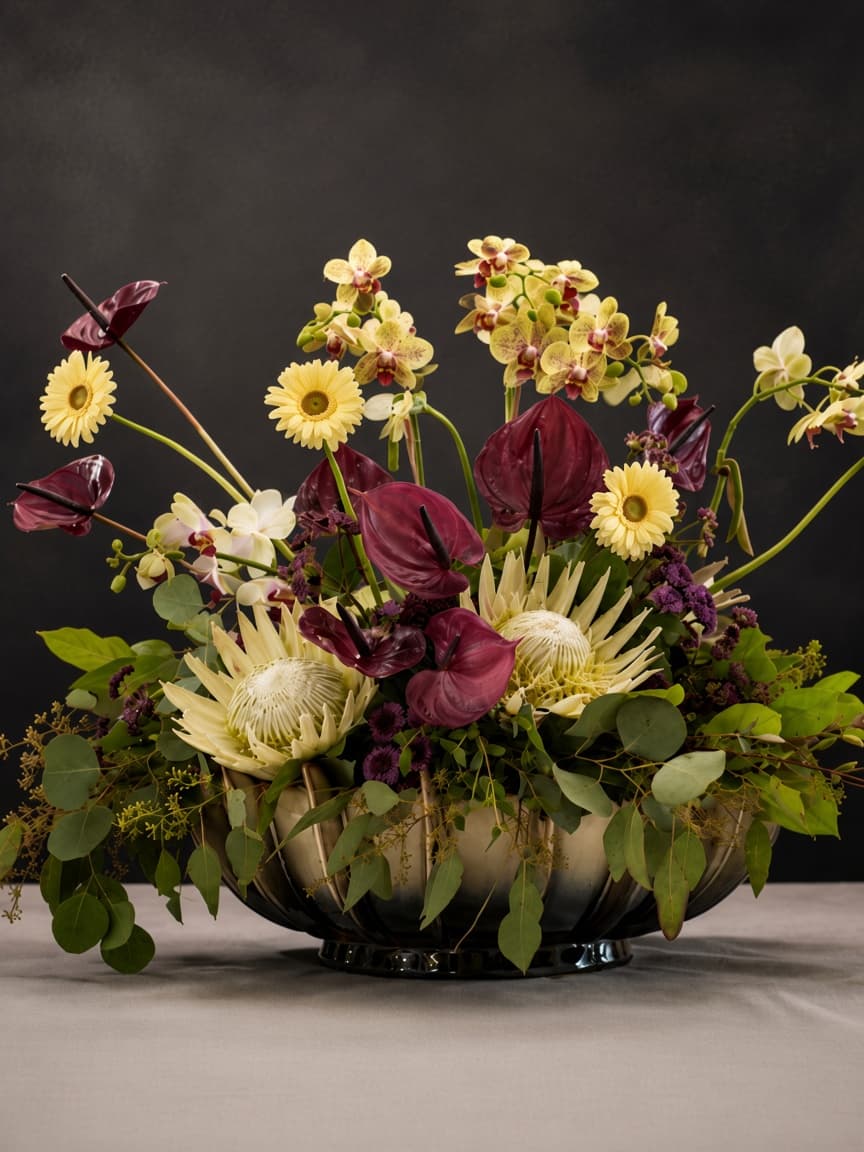
Habana Way
$1,000Our most abundant composition, $1,000. Sized for a lobby, a long dining table or an event entrance.
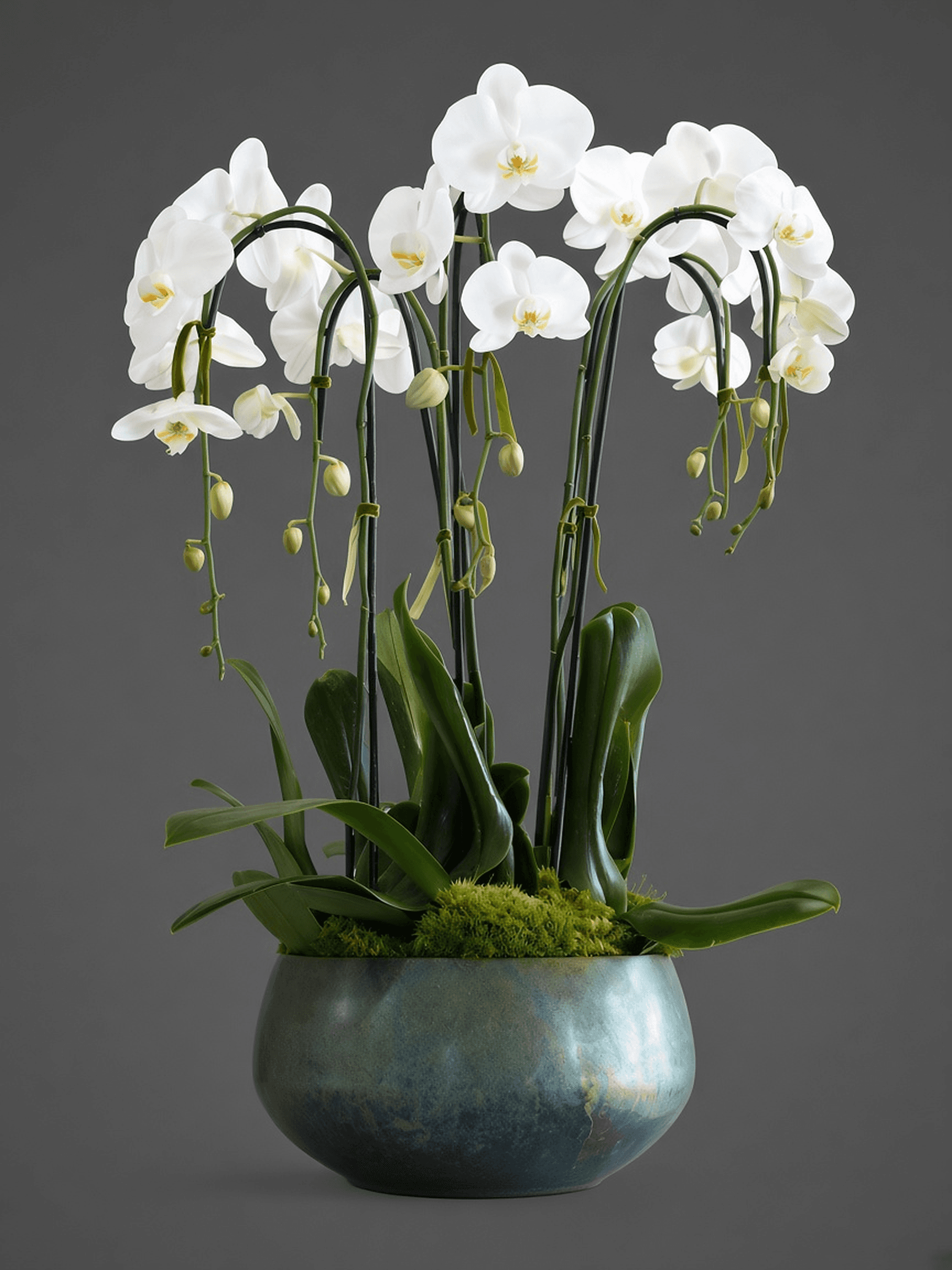
The Grand Orchid Composition
$500A tall phalaenopsis composition, $500. Orchids are tropical too, and this is the longest-lasting option.
The stems
The tropical flowers you'll see most
Orchids are tropical plants too, and a potted phalaenopsis lasts longer than any cut stem. See our orchids page.
- Heliconia, sometimes called lobster claw, has hanging or upright bracts in red, orange and yellow. It's dramatic and long-lasting, and the hanging varieties suit tall arrangements.
- Ginger, especially red and pink torch ginger, has tall stems with cone-shaped flowers. It lasts well and brings height to an arrangement.
- Anthurium has a glossy, heart-shaped spathe in red, pink, white or green. It's one of the longest-lasting cut flowers, often two weeks or more.
- Protea, especially king protea, has a large, textured head. Proteas come from South Africa and Australia rather than the tropics, but florists group them together because they share the same bold style.
- Birds of paradise have a striking orange and blue flower that looks like a bird's head. They're dramatic in a tall vase.
- Monstera and palm leaves are used for foliage. A few large leaves change the whole look of an arrangement.
How long they last
Vase life by stem
Tropical flowers are generally long-lived. These are typical ranges in an air-conditioned room, with fresh water:
That's often longer than standard roses, and much longer than garden roses, peonies or hydrangeas.
- Anthurium: two to three weeks.
- Heliconia and ginger: one to two weeks.
- Protea: one to two weeks, and the heads dry well, so many people keep them afterwards.
- Birds of paradise: about a week, and you can gently lift new flowers out of the sheath as old ones fade.
- Monstera leaves: two weeks or more.
Care
What tropical flowers need, and what they don't
Tropical stems are hardy, but they have one weakness: cold. Most tropical flowers suffer chilling injury below about 50°F to 55°F. The petals or bracts darken, and the flower deteriorates quickly. That's why florists don't keep heliconia or ginger in the same cooler as roses.
At home:
- Don't put tropical flowers in the refrigerator or next to an air-conditioning vent.
- Re-cut the stems every few days and change the water.
- Mist anthurium and heliconia occasionally. They take in some moisture through their surface.
- Keep them out of direct, hot sun. They tolerate warmth, but not a sunny window in August.
At events
Why tropical florals suit Florida events
A Tampa Bay summer is hard on cut flowers. Daytime highs are often around 90°F, with high humidity, and an outdoor ceremony can mean hours in that heat. Many delicate flowers wilt in that time, while heliconia, anthurium, ginger and monstera hold their shape better.
Tropical designs also suit:
For wedding planning in the heat, our guide to wedding flowers in Tampa heat covers which flowers last outdoors.
- Outdoor ceremonies, poolside events and waterfront venues, where flowers face sun and wind.
- Large spaces, such as ballrooms, lobbies and showrooms, where small flowers look lost.
- Brand events and activations, where strong color and graphic shapes photograph well. See our brand activations and installations page.
Mixing
Garden-tropical designs
Not every room suits a full tropical arrangement. A bold mix of heliconia and ginger can feel loud in a traditional dining room or a sympathy setting. A garden-tropical design mixes softer garden flowers with tropical foliage and one or two bold stems. It feels lush without being loud, and it's the approach behind our signature Tampa Luxe arrangement.
If you're not sure, a few guidelines:
- For a modern or minimal space, choose sculptural tropical stems with lots of green and little color.
- For a traditional home, choose a garden-tropical mix with softer colors.
- For a celebration or an event, go bold with color.
- For sympathy, white anthurium and orchids are calm and respectful. See our sympathy flowers page.
At home
Where tropical arrangements look right
Tropical arrangements are often tall and wide, so placement matters more than with a small bouquet.
Monstera leaves and palm fronds are large and can tip a light vase, so a heavy vessel on a flat surface is a good idea in a home with pets or children.
- An entry console or a hall table gives a tall heliconia or ginger design the height it needs, and it's the first thing guests see.
- A kitchen island works for a lower garden-tropical mix, as long as it isn't in the path of hot sun from a west window.
- A dining table needs a low design, so people can see each other across it. Ask for a low arrangement if that's where it's going.
- A lanai or a covered porch is fine for an evening, but bring the arrangement inside overnight in the cooler months, when temperatures can dip into the 40s, and during the hottest part of a summer day.
Seasons
What changes through the year
Florida's seasons are gentle, but they still affect tropical flowers. In winter, cold snaps sometimes bring nights into the 40s across Tampa Bay, and tropical stems can be damaged in transit or on a porch. In summer, the main risk is heat in a parked car. Year-round, the safest plan is to take an arrangement straight inside and keep it at room temperature. Hurricane season, from June to November, can also affect shipping of imported stems, so for an event in late summer it's worth having a second-choice flower in mind.
Ordering
Planning ahead for specific stems
Tropical stems are grown in places such as Hawaii, Central and South America and, for some varieties, Florida itself. Availability changes with the season and with shipping. If you need a specific flower, such as king protea for an event, tell us early. If a stem isn't available, we'll suggest the closest match in color and shape. For everyday orders, our designers pick the best tropical stems available that week. For deliveries, see flower delivery, or call (813) 252-0601.
FAQ
Tropical flower questions.
How long do tropical flowers last?
Most last one to two weeks in an air-conditioned room with fresh water. Anthurium often lasts two to three weeks. That's longer than most garden flowers.
Can I put tropical flowers in the fridge?
No. Most tropical flowers suffer chilling injury below about 50°F to 55°F. The petals darken and the flowers deteriorate. Keep them at room temperature and away from air-conditioning vents.
Are tropical flowers good for outdoor events in Florida?
Yes. Heliconia, anthurium, ginger and monstera hold up better in heat and humidity than most garden flowers, which makes them a practical choice for outdoor ceremonies and poolside events.
Is protea a tropical flower?
Not strictly. Protea comes from South Africa and Australia. Florists group it with tropical flowers because it has the same bold, sculptural style.
What tropical flowers are appropriate for sympathy?
White anthurium and white orchids are calm and respectful. Bright heliconia and ginger are usually better kept for celebrations.
From the journal
Send tropical flowers today.
Order online, or call us for custom designs and same-day requests.