Flowers
Choose by flower.
How the main flowers compare for vase life, Florida heat, scent and season, and where to find them in the studio's designs.
Flower first
Some people know the flower they want before they know the design.
If you already know you want orchids, roses or something tropical, start here. The three main guides cover each in depth, with care, colors and the designs that feature them. This page compares them side by side, along with the other flowers you'll see in the studio's work, so you can choose by what matters to you: how long it lasts, how it handles Florida heat, how it smells, and whether it's safe around pets.
The guides
Three flowers in depth
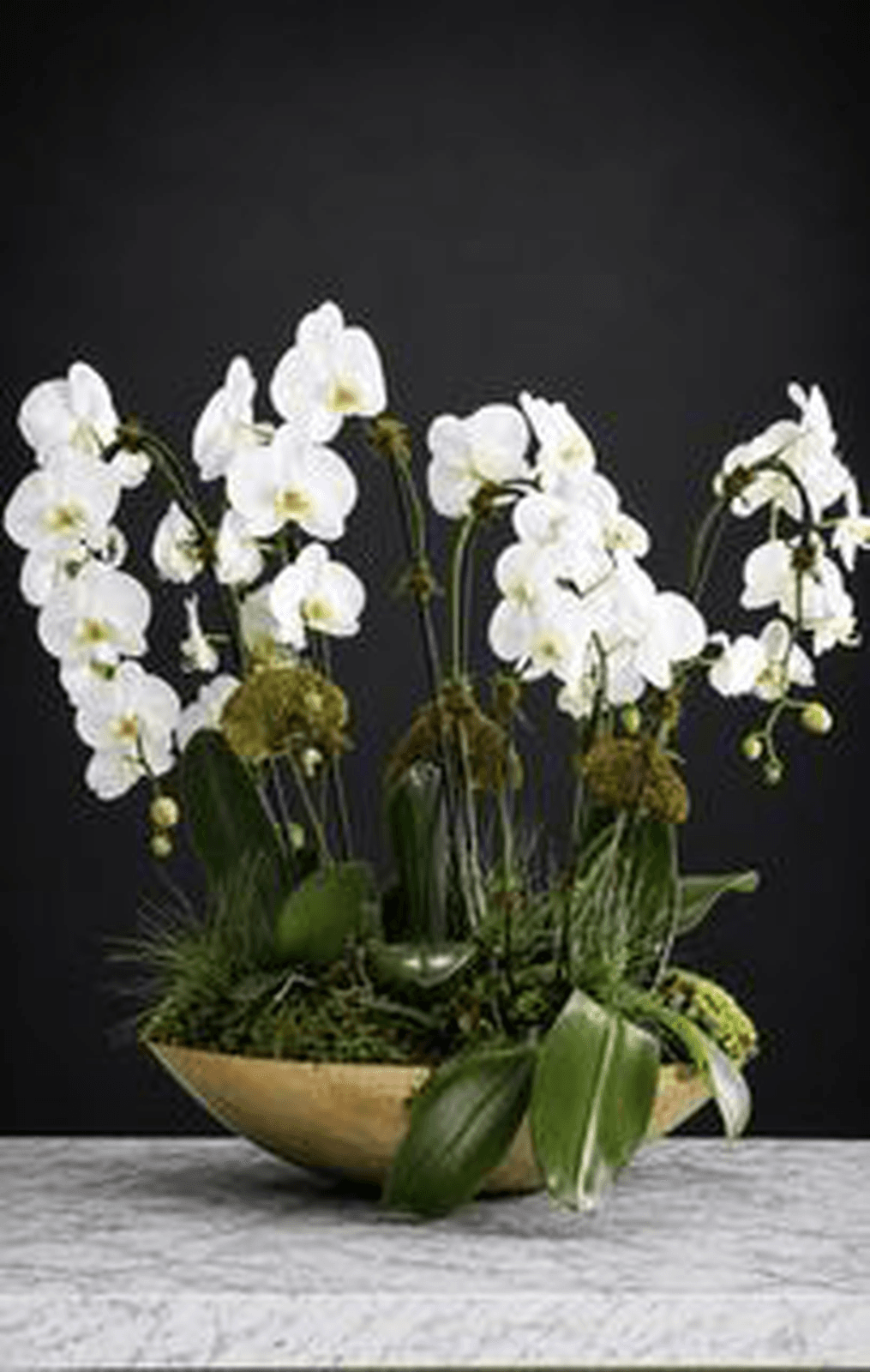
- Orchids: potted phalaenopsis from $125, lasting weeks or months. The best long-lasting gift.
- Roses: garden and standard roses, colors and stem counts, from a wrapped bouquet to The Bespoke Rose at $750.
- Tropical flowers: anthurium, heliconia, ginger, protea and monstera, which suit Florida's climate and last well.
Compared
Vase life, heat and scent
A quick comparison of the flowers that appear most in the studio's designs. Vase life assumes good care.
- Phalaenopsis orchids (potted): flowers last one to three months. Handle heat well indoors. Little or no scent.
- Standard roses: about five to seven days. Sensitive to heat. Light scent, depending on the variety.
- Garden roses: about four to six days. Romantic, full shape. Often strongly scented. Delicate in heat.
- Anthurium: two to three weeks. Very heat-tolerant. No scent.
- Heliconia and ginger: one to two weeks. Built for heat. No scent.
- Protea: one to two weeks, and they dry well. Hardy. No scent.
- Hydrangeas: four to seven days. Thirsty, and they wilt fast in heat. Light scent.
- Ranunculus: five to seven days. Delicate. No scent.
- Lilies: one to two weeks. Strong scent, and the pollen stains. Highly toxic to cats.
Heat
What holds up in Florida
Tampa summers are hot and humid, and that shortens the life of many flowers. Tropicals and orchids are built for it. Anthurium, heliconia, ginger and protea hold up for days in heat that would wilt a hydrangea in hours. For a summer delivery, an outdoor event or a gift to someone who keeps the house warm, lean tropical.
Roses, garden roses, peonies and hydrangeas give the softest, most romantic looks, but they're happiest in air-conditioning, away from sun and vents.
Scent
Fragrance, allergies and offices
Fragrance is part of the pleasure for some people and a problem for others. Garden roses, lilies, gardenias, tuberose and stocks are strongly scented. Orchids, anthurium, heliconia, ranunculus, protea and most tropical flowers have little or none.
For hospitals, offices, small apartments, or anyone with allergies, choose low-scent flowers. Avoid lilies, which are strongly scented and shed pollen.
Pets
Safe and unsafe flowers
If the recipient has pets, check the flowers. According to the ASPCA:
When in doubt, choose orchids, or ask us to leave lilies out.
- Lilies (true lilies and daylilies) are highly toxic to cats. Even small amounts of pollen or water from the vase can cause kidney failure.
- Orchids (phalaenopsis) are non-toxic to cats and dogs.
- Roses are non-toxic, though thorns can hurt.
Seasons
What's available when
Most cut flowers are available year-round, because the majority of flowers sold in the US are imported, mainly from Colombia and Ecuador. But some flowers have true seasons:
Florida grows much of the country's cut foliage, especially leatherleaf fern from Pierson in Volusia County. The greenery in many arrangements may well be Florida-grown. For a month-by-month view of what's at its best here, see our page on seasonal flowers in Florida.
- Peonies: late spring, roughly April to June.
- Ranunculus and anemones: winter to spring.
- Dahlias: late summer and autumn.
- Tulips: winter to spring.
- Garden roses, orchids and tropicals: year-round.
Mixing
Garden meets tropical
Some of the most Tampa-feeling designs mix the two worlds: soft garden roses and ranunculus with anthurium, monstera leaves or orchids. The studio's signature Tampa Luxe is built on that idea. The garden flowers bring softness and color, and the tropicals bring structure, shine and staying power. It's a good choice when you want something romantic that also handles the climate.
When mixing, the tropicals usually last longer than the garden flowers. Once the roses fade, remove them and the tropical stems can carry on in fresh water for another week or more.
Color
Choosing a palette
Color often matters more than the flower itself. A few things to consider:
The studio's wrapped bouquets come in five looks, from the white and green Evergreen Pearl to the warm Bold Edit, which is a quick way to choose a palette.
- The room: a white-walled condo suits almost anything. A dark wood interior wants lighter colors that stand out.
- The light: Florida light is bright and warm. Pale pastels can look washed out in strong sun, while saturated colors hold up.
- The person: favorite colors beat any rule.
- The occasion: whites and greens for sympathy, brights for celebration, deep reds and burgundies for romance.
Cost
Why some flowers cost more
Flower prices vary for a few reasons:
If budget matters, ask for designer's choice in a palette, and let the designer use what's best value that day.
- Fragility: garden roses and peonies bruise easily and need careful shipping.
- Season: out-of-season flowers come from further away, or from greenhouses.
- Size: a large orchid with multiple spikes takes longer to grow.
- Demand: red roses cost more in February, because everyone wants them at once.
Sustainability
Fewer miles, longer life
Because most cut flowers are imported, choosing longer-lasting flowers is one of the simplest ways to reduce waste. An orchid that flowers for two months replaces several weeks of cut arrangements. Seasonal flowers and local foliage travel less. And keeping arrangements cool and in fresh water makes them last longer, which means fewer replacements. Event flowers can have a second life too; our note on repurposing event flowers explains how.
Designs
Where each flower appears
Every design that arrives in its own vessel is gathered in the flowers in a vase collection.
- Orchids: Single Orchid $125, Orchid Duo $175, Triple Orchid $250, and the Grand Orchid Composition $500.
- Roses: the Bespoke Wrapped Bouquet from $100, Culbreath Isles from $150, the Bay Way $325 and The Bespoke Rose $750.
- Tropical: the Tampa Luxe $300, the Palma Ceia $500 and the Habana Way $1,000.
- Mixed and seasonal: the Bella Vista from $150, Designer's Choice from $200, and the Avilas Ashby $750.
Care
Making them last
A few rules apply to almost every cut flower:
For orchids, see our orchid care guide.
- Trim stems by about an inch at an angle before putting them in water.
- Remove leaves below the waterline, which rot and cloud the water.
- Change the water every two or three days, and top it up daily.
- Keep flowers out of direct sun and away from fruit, which releases ethylene and speeds wilting.
FAQ
Choosing flowers: questions.
Which flowers last longest?
Potted orchids, which keep flowering for one to three months. Among cut flowers, anthurium, heliconia and protea last two weeks or more.
What flowers do best in Florida heat?
Tropical flowers, such as anthurium, heliconia, ginger and protea, and potted orchids. Roses, peonies and hydrangeas prefer air-conditioning.
Which flowers are safe for cats?
Orchids and roses are non-toxic to cats. Lilies are highly toxic, so avoid them in homes with cats.
What flowers have the least scent?
Orchids, anthurium, heliconia, ranunculus and protea have little or no scent, so they suit offices, hospitals and anyone with allergies.
When are peonies in season?
Roughly April to June. Outside those months, garden roses and ranunculus give a similar soft, full look.
Looking for something specific?
Call us about a favorite flower, and we'll tell you what's in season.