Corporate clients
The houses we compose for





















Corporate · Floral branding ·
Florist Branding: How Brands Use Flowers as a Signature
Walk into a boutique you love and the flowers are rarely an afterthought. The same palette greets you at the door, sits on the counter and turns up in the gift bag. That consistency is floral branding: choosing flowers the way a brand chooses a typeface, so they say something specific and say it every time.
At Flor + Palma we design flowers for luxury retail, residences, hospitality and corporate clients across Tampa Bay. This is how we approach florist branding, what makes a floral signature, and how to keep it consistent from a weekly lobby arrangement to a launch-night installation.
What floral branding means
A floral signature is a small set of decisions that stay fixed while the flowers themselves change with the seasons. Usually it comes down to four things: a palette, one or two signature stems, a family of vessels and a sense of scale. Get those right and a client can recognize your arrangements in a photo before they see the logo.
It is not about matching a hex code. Flowers are living material and no two deliveries are identical. The goal is a recognizable mood, the same warmth or restraint or drama, delivered reliably.
Signatures we have designed
The clearest way to explain floral branding is through work you can see on our corporate page. Each of these started from the brand rather than from what happened to be at the market that week.
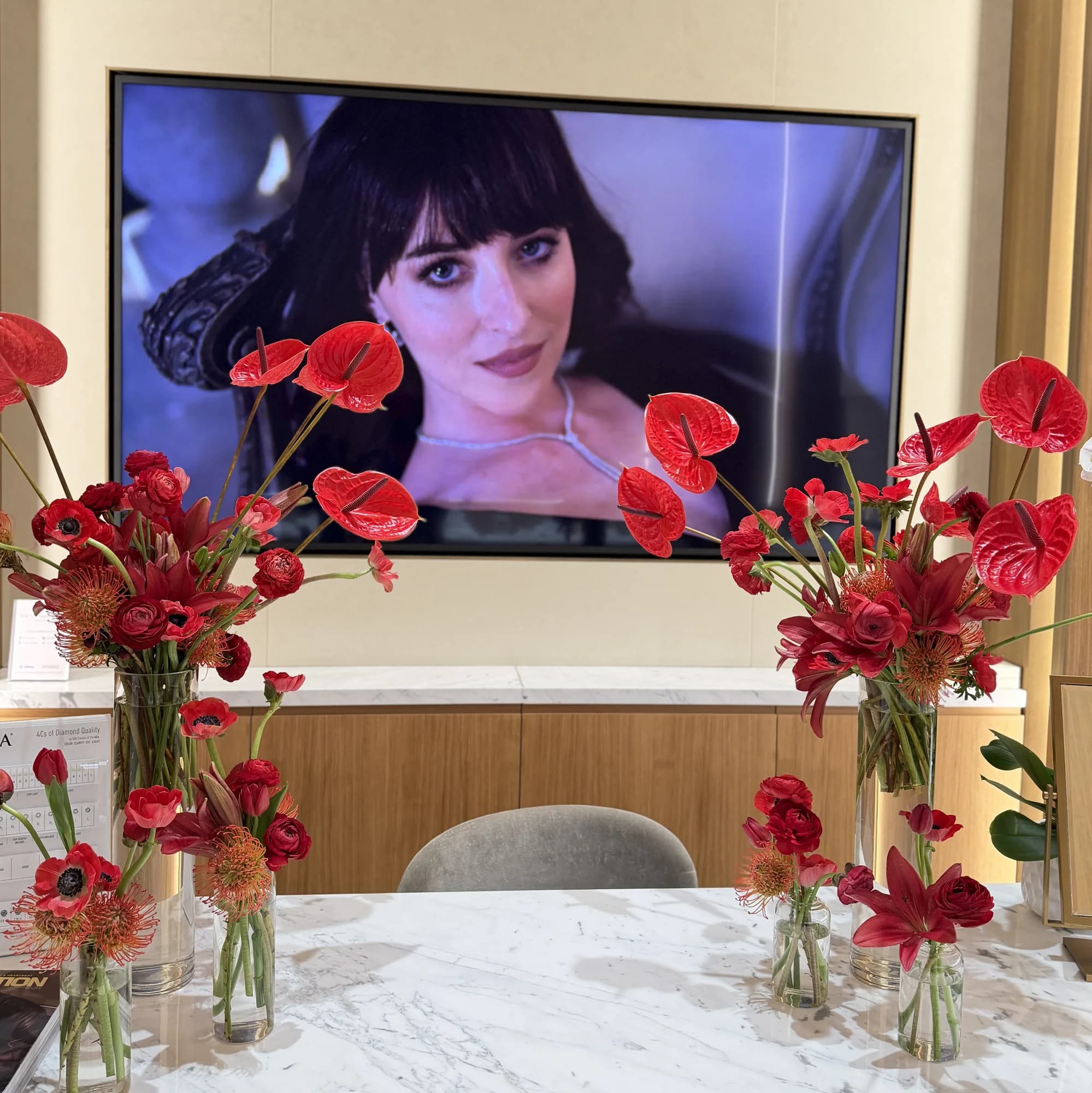
- Ferrari. Red, and only red: anthurium, roses and anemones in black vessels, so the flowers carry the brand color and nothing else.
- Gucci. Coral dahlias and pink ranunculus in clear glass, styled through the boutique so the color repeats as you move through the space.
- Tudor. A single strong red anthurium arrangement on the counter. One confident piece can carry a brand.
- Anthropologie. A styled floral cart for an in-store activation, with bird of paradise and fruit worked into the display.
- The Ritz-Carlton Residences. Lobby arrangements with blue delphinium, protea, ginger, heliconia and monstera, scaled to a residential lobby.
Building a floral identity
When a brand comes to us without a floral language, we start with what already exists: the logo colors, the interior materials, the photography style and the customer. A brand with a dark, polished interior can carry saturated reds and deep greens; a light, airy space usually wants whites, creams and soft blush with plenty of foliage.
Next we choose signature stems. These are flowers that are reliably available most of the year, so the look does not disappear for half the calendar. Orchids, anthurium, roses and good foliage are dependable foundations; seasonal stars like peonies or dahlias can join when they are at their best.
Then vessels. Repeating the same vessel family, whether black ceramic, clear glass or a particular stone, does as much for recognition as the flowers do. Finally we set the scale for each place the brand lives: a statement at the entry, smaller pieces on counters and fitting tables, and a gift size that travels well.
Touchpoints to think about
Floral branding works best when it shows up in every place a client meets you:
- Entry and lobby. The first impression and usually the largest piece. This is where height and the signature color do the most work.
- Counters and reception. Smaller, lower arrangements people see up close, so stem quality matters more than size.
- Events and launches. Installations that push the signature further for one night, built around the product and the photos people will take.
- Gifts. Arrangements sent on your behalf for closings, milestones and thank-yous, so the brand arrives at a client's door.
- Photography and social. Flowers chosen to look right on camera, which in practice means clear color and a defined shape.
Consistency through a weekly program
A floral signature is only as strong as its least consistent week. That is why most of our brand work runs as a weekly or biweekly program: the same team, the same palette and the same vessels, refreshed on a schedule so the arrangements always look their best and never sit past their prime.
Within the program the flowers change with the season, which keeps regular visitors noticing them. The guardrails stay fixed. A brand built on red might move from anthurium and roses to dahlias in the fall, but it never drifts into pastel.
Scent, setting and the details
Fragrance is part of a brand too. In a fragrance or beauty boutique, or near a restaurant table, strongly scented flowers can compete with the product, so we lean on low-scent stems there. In a hotel lobby or residence a gentle scent can be part of the welcome.
Light and temperature decide what will last. Arrangements near bright windows or doors that open to Florida heat need tougher stems than those in a cool, shaded interior, and we design each placement with that in mind.
Residences, hotels and hospitality
Floral branding is not only for retail. In a residential building or hotel the flowers are part of how the place feels to the people who live in it or stay there, and they are seen every single day. The arrangements need to welcome rather than announce, and they have to look right at seven in the morning as well as at a cocktail hour.
For these spaces we usually keep the signature quieter: a consistent palette that suits the interior, one dependable statement stem and a scale that fills the lobby without crowding the furniture. Our work for the Ritz-Carlton Residences is a good example, where tropical texture and blue delphinium sit comfortably in a residential setting.
Where floral branding goes wrong
The most common problem is drift. Each week's arrangement looks lovely on its own, but over a few months the palette wanders, the vessels change and nobody would call it a signature. Writing the guardrails down, even in a single page, solves most of it.
The second is choosing a signature flower that is only available for a few weeks a year. If the whole identity rests on peonies, it disappears for much of the year. Build the signature on stems you can rely on and treat seasonal flowers as guests.
The third is scale. A small arrangement in a large lobby looks like a mistake rather than restraint, and an oversized piece on a reception desk gets in the way of the people working there. We measure and design each placement for its spot.
How we work with brands
It starts with an inquiry: your space, your brand standards and what you would like the flowers to do. We visit, learn the look, and come back with a visual proposal and itemized pricing your team can approve internally. From there we can design a single launch, a season of events or an ongoing program.
See the work on our corporate page, read about architectural installations, or contact us to talk about your brand.
FAQ
Questions, answered.
What is floral branding?
Using a consistent palette, signature stems, vessels and scale so a brand's flowers are recognizable wherever clients see them, from the lobby to events and gifts.
Can you keep our flowers consistent every week?
Yes. Most brand work runs as a weekly or biweekly program with fixed palettes and vessels, while the flowers change with the season.
Do you design for brand events and launches?
Yes. We design product launches, store openings, client dinners and brand activations across Tampa Bay.